An advertising executive longs to escape the cramped city life and construct his ideal country residence. What begins as a dreamy plan quickly turns chaotic as he wrestles with endless construction setbacks, a cantankerous contractor, unexpected expenses, and a stubborn heating system, turning the quest for a perfect home into a comedy of errors.
Find where to stream, rent, or buy Mr. Blandings Builds His Dream House (1948) in the US with current JustWatch availability, up-to-date pricing, and platform listings for subscription, rental, and digital purchase options.
Warning: spoilers below!
Haven’t seen Mr. Blandings Builds His Dream House yet? This summary contains major spoilers. Bookmark the page, watch the movie, and come back for the full breakdown. If you're ready, scroll on and relive the story!
Trace every key event in Mr. Blandings Builds His Dream House (1948) with our detailed, chronological timeline. Perfect for unpacking nonlinear stories, spotting hidden connections, and understanding how each scene builds toward the film’s climax. Whether you're revisiting or decoding for the first time, this timeline gives you the full picture.
Last updated: August 19, 2025 at 05:13
Find frequently asked questions about the Mr. Blandings Builds His Dream House (1948) timeline, including chronological order, nonlinear jumps, cause-and-effect links, and scene sequence clarifications. This timeline FAQ helps explain when key events happen, how moments connect, and why the story unfolds in that specific order.
Jim and Muriel were dissatisfied with their cramped New York City apartment, which felt too small for their family of four. Muriel had secretly planned to remodel by knocking out a wall, but Jim began considering larger changes after seeing an advertisement for new homes in Connecticut's peaceful suburbs. The appeal of escaping urban congestion and having space for their daughters motivated them to pursue the dream of owning a country home.
Early scenes show the family struggling with their limited apartment space and expressing frustration with city living.
Jim and Muriel were charmed by the property's historic significance, it was nearly 200 years old and reportedly a stop for General Gates during the Revolutionary War. Their emotional attachment to the romantic idea of living in a historic country home override practical financial considerations. Despite their lawyer Bill Cole warning Jim not to follow his heart over his head, they proceeded with the purchase because the house represented their dream of a better life.
Bill Cole's warning about buying with the heart rather than the head foreshadows the financial difficulties ahead.
WHAM was a canned meat product (similar to spam) that Jim's advertising agency was promoting. The campaign was problematic and risked damaging careers, placing Jim in a difficult professional position. His job security was threatened until his maid Gussie came up with the successful slogan 'If you ain't eating WHAM, you ain't eating ham,' which saved his position and earned her a $10 raise and recognition in the advertising materials.
Jim's stress from the WHAM campaign parallels his mounting frustration with the house construction.
During a fierce thunderstorm, Bill stayed overnight at the Connecticut house while Jim was back in New York. Since Muriel was the only other person present, Jim's stress and jealousy led him to suspect an affair. However, this was merely a comedic misunderstanding, the situation was completely innocent, and the film uses this brief marital tension to highlight Jim's emotional fragility during the stressful construction period.
Earlier scenes show Jim's stress levels rising as construction costs escalate, making him more prone to suspicion.
The family dug a well to provide water for their new home but discovered a spring just a few feet below the foundation. This unexpected geological feature created drainage problems and required additional work to address, adding to the construction costs and delays. The spring represents one of the many unforeseen complications that consistently plagued the building project.
The timeline notes emphasize that unexpected problems arose at every turn throughout construction.
Legal issues emerged when the previous owner sued the Blandings for unpaid mortgage. This lawsuit created additional complications and delayed the construction process, adding to the family's financial burden and stress. The legal dispute stemmed from issues related to the property's ownership history that weren't resolved at the time of sale.
The timeline indicates the house required demolition because it was dangerously unsound, complicating the ownership situation.
Gussie, the family's maid and cook, came up with the catchy slogan 'If you ain't eating WHAM, you ain't eating ham' for the troubled WHAM advertising campaign. This clever pitch not only resolved Jim's professional crisis but also earned Gussie a $10 raise and had her likeness used in the actual advertising campaign. Her contribution represents a heartwarming moment where the household help saves the day.
Gussie's role in the household establishes her as a valued member who contributes to family problem-solving.
The initial budget was estimated at $18,000, but construction costs escalated significantly due to the numerous unexpected problems: demolishing the unsafe structure, addressing the spring under the foundation, fighting the previous owner's lawsuit, and various other setbacks. While the exact final figure isn't specified, the costs far exceeded the original estimate, creating substantial financial strain for the family.
Timeline entries repeatedly note rising costs and unexpected complications throughout construction.
Bill originally warned Jim about buying with his heart rather than his head, but after witnessing the family's perseverance through countless hardships, he came to appreciate that some things are truly valuable when purchased emotionally. His later observation that 'some things you do buy with your heart and not your head. Maybe those are the things that really count' reflects the movie's theme that pursuing dreams, despite practical difficulties, can lead to genuine fulfillment.
Bill's initial warning about emotional decisions sets up his eventual reversal and endorsement of following the heart.
The film concludes that while pursuing a dream home involves practical hardships, financial stress, and unexpected obstacles, the emotional fulfillment of achieving that dream makes the journey worthwhile. The Blandings' experience illustrates that sometimes buying with the heart rather than pure logic leads to genuine happiness, their beautiful new home and strengthened family bonds prove that perseverance through difficulty yields lasting reward.
The opening desire for a better living situation planted the seeds for this eventual realization about dreams and perseverance.
Discover curated groups of movies connected by mood, themes, and story style. Browse collections built around emotion, atmosphere, and narrative focus to easily find films that match what you feel like watching right now.
Stories where simple, relatable plans spiral into hilarious chaos.If you liked the hilarious construction mishaps in Mr. Blandings Builds His Dream House, you'll enjoy these movies that find humor in simple plans going awry. Discover similar stories of chaotic family projects, relatable relationship entanglements, and lighthearted comedies about life's little frustrations.
Stories in this thread typically follow a straightforward, goal-oriented plot where a character or family sets out on a common aspirational project. The narrative arc is driven by a series of escalating, often predictable, yet charmingly executed mishaps that test patience and relationships, all leading to a satisfying and happy resolution that reinforces the value of perseverance.
Movies are grouped here based on their shared light tone, steady pacing, and focus on situational comedy derived from relatable, low-stakes problems. They offer a comforting viewing experience where the conflicts are humorous rather than threatening, and the emotional journey ends on a warm, positive note.
Satirical tales of the idealized home life meeting messy reality.Fans of Mr. Blandings Builds His Dream House will appreciate these satirical stories about family life and suburban aspirations. Explore similar comedies and dramas about the challenges of home ownership, midlife crises, and the humorous reality behind the dream of a perfect domestic setup.
The narrative pattern involves a character, often a family man or couple, seeking to improve their life by attaining an idealized version of home and family. The story then deconstructs this dream through a series of comedic or satirical challenges—financial stress, stubborn contractors, or relationship strains—ultimately finding value not in perfection, but in the imperfect, lived-in reality of family and home.
These movies share a common thematic focus on the 'suburban dream' or domestic ideal, using it as a backdrop for comedy and character growth. They are united by an aspirational yet frustrated mood, a light emotional weight, and a tone that is humorous and warm even when critiquing societal norms.
Don't stop at just watching - explore Mr. Blandings Builds His Dream House in full detail. From the complete plot summary and scene-by-scene timeline to character breakdowns, thematic analysis, and a deep dive into the ending - every page helps you truly understand what Mr. Blandings Builds His Dream House is all about. Plus, discover what's next after the movie.
Read a complete plot summary of Mr. Blandings Builds His Dream House, including all key story points, character arcs, and turning points. This in-depth recap is ideal for understanding the narrative structure or reviewing what happened in the movie.
Discover the characters, locations, and core themes that shape Mr. Blandings Builds His Dream House. Get insights into symbolic elements, setting significance, and deeper narrative meaning - ideal for thematic analysis and movie breakdowns.
Discover movies like Mr. Blandings Builds His Dream House that share similar genres, themes, and storytelling elements. Whether you’re drawn to the atmosphere, character arcs, or plot structure, these curated recommendations will help you explore more films you’ll love.
Mr. Blandings Builds His Dream House (1948) Plot Summary & Movie Recap
Mr. Blandings Builds His Dream House (1948) Scene-by-Scene Movie Timeline
Mr. Blandings Builds His Dream House (1948) Spoiler-Free Summary & Key Flow
Movies Like Mr. Blandings Builds His Dream House – Similar Titles You’ll Enjoy
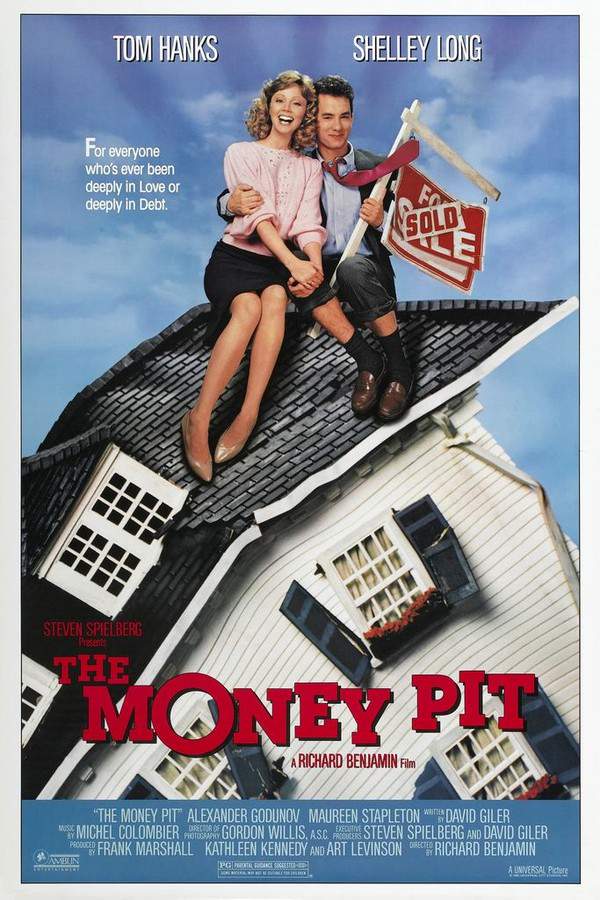
The Money Pit (1986) Film Overview & Timeline
A House of Your Dreams (2006) Detailed Story Recap
The Rough House (1917) Full Movie Breakdown
A Home of Your Own (1964) Detailed Story Recap
Blondie’s Big Deal (1949) Plot Summary & Ending Explained
Parlor, Bedroom and Bath (1931) Detailed Story Recap
One Week (1920) Ending Explained & Film Insights
The Play House (1921) Ending Explained & Film Insights
Man About the House (1974) Full Movie Breakdown
Blithe Spirit (1945) Story Summary & Characters
The Finishing Touch (1928) Full Summary & Key Details
Mr. & Mrs. Smith (1941) Full Summary & Key Details
Mr. Hobbs Takes a Vacation (1962) Film Overview & Timeline
Man of the House (1995) Plot Summary & Ending Explained
Bachelor in Paradise (1961) Ending Explained & Film Insights