Plot Explained Spoilers guaranteed!
Plot Explained

Browse by genre

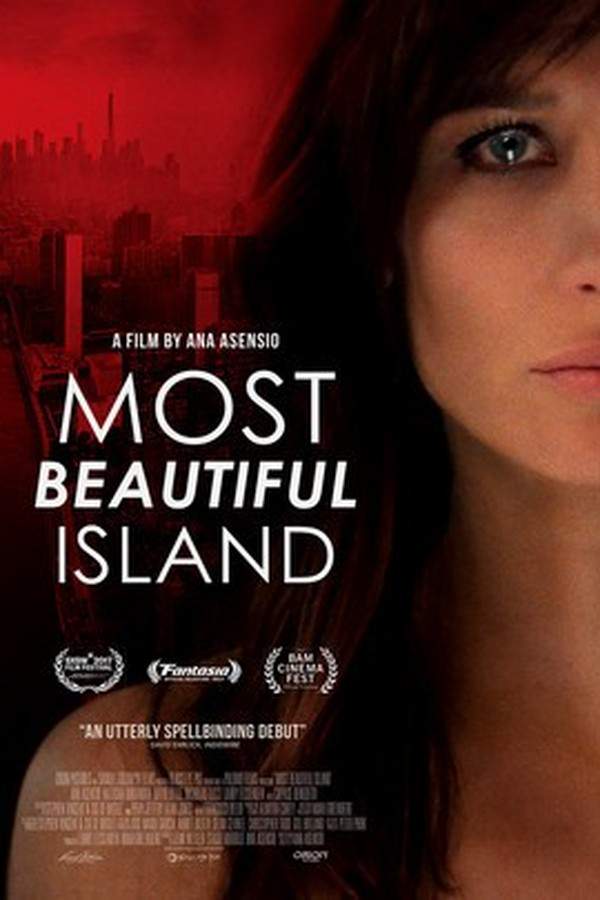
Most Beautiful Island (2017) movie poster

Plot Summary

Most Beautiful Island (2017) Plot Summary Explained

Release, runtime and language
2017 · 80 min · English
Echo score 75
Starring
Natasha Romanova, Ami Sheth, Ana Asensio, Anna Myrha, Caprice Benedetti, David Little

Seeking to leave behind a difficult past, Luciana finds her routine shattered and is drawn into a dangerous situation. She becomes entangled in a harrowing ordeal where vulnerable lives are used for the entertainment of powerful and unscrupulous individuals. The experience tests her resilience as she fights to survive and protect others.

On this page (6)
  1. 1 Where to watch
  2. 2 What happens: full plot
  3. 3 Plot questions answered
  4. 4 Movie threads
  5. 5 Movies like Most Beautiful Island
  6. 6 Every angle

Where to watch

Where to Watch Most Beautiful Island (2017)

Where can you watch Most Beautiful Island? Stream, rent or buy it in the US, including on Hoopla, Kanopy and Amazon MX Player: current JustWatch availability with up-to-date prices.

Streaming availability powered by JustWatch

Full plot summary · contains spoilers

What Happens in Most Beautiful Island: Full Plot Summary

The whole story of Most Beautiful Island (2017) explained, from the opening scene to the final frame: every key event, every twist and what it all adds up to. Read it as a quick recap before the sequel, to check a scene you missed, or to finally understand what really happened.

There's little in the first half of Most Beautiful Island, directed by Ana Asensio, that hints at the shocking events of its latter part, aside from the involvement of indie-horror distributor Glass Eye Pix. Initially, the film appears to be a typical Sundance selection focusing on multicultural strivers in New York City. At its heart is Luciana (Ana Asensio), an immigrant from Spain trying to escape her past as she navigates Brooklyn—often taking the F line—while juggling menial jobs to survive.

The narrative follows Luciana through a seemingly ordinary day, which includes visits to a doctor she cannot afford due to the lack of insurance and returning to her cramped apartment filled with items clearly tagged with “Not Yours” by her roommate. We witness her as she picks up disrespectful children from school and walks them home, and even dressing up in a playful yet provocative outfit to hand out flyers. Her world is further complicated when her friend Olga (Natasha Romanova), who works with her on the flyering job, requests Luciana to take her place at another gig. The offer sounds remarkably enticing: a chance to earn $2,000 for merely attending a cocktail party, requiring nothing more than a black dress and high heels—no other obligations involved.

Up to this point, Most Beautiful Island unfolds like an ethnographic quasi-documentary, vividly portraying Luciana's experiences amidst the diverse immigrant hustle in New York City. Each woman depicted is fueled by personal aspirations amidst seemingly endless yet elusive economic opportunities. Luciana often receives support from fellow immigrants, like benevolent shopkeepers who allow her to defer payment, and taxi drivers who dismiss her financial constraints. Yet, some remind her about the harsh reality of self-made luck and the consequences of fate—a theme that becomes painfully evident in the latter half of the film.

The job offer from Olga leads Luciana to a dimly lit basement near the West Side Highway, which proves to be a trap. It soon becomes clear that the glamorous cocktail party is shrouded in darkness as women, marked by numbers in chalk, are subjected to the gaze of well-dressed attendees sipping champagne, while stern men in black stand guard to prevent any escape. The atmosphere grows thick with tension and foreboding as the women are led, one by one, into a "party room." When Luciana is finally summoned, she is confronted with a surreal yet harrowing reality—a cruel situation that is stomach-churning in its horror, compounded by the realization that many of these women, desperate for money, have willingly put themselves in peril. The experience is disturbingly reminiscent of sexual assault.

In a departure from typical genre expectations, where victims may ultimately rise to confront their tormentors, the women here react in a more realistic manner—they take the cash and flee, devoid of any grand climactic moments or vengeful justice. The film closes with a haunting shot of a stretch of New York City highway, where a dilapidated sign reads: “BIG APPLE BIG DREAMS.” Its grotesque irony resonates more deeply when recalling the film’s introductory note: “Inspired by true events.” This stark reality serves as a chilling reminder of how many vulnerable individuals navigate life today.

Last updated: November 04, 2024 at 01:53

Was this helpful?

Plot questions answered

Most Beautiful Island Plot Explained: Your Questions Answered

The questions people ask most about Most Beautiful Island (2017): what happens in the confusing scenes, why the characters do what they do, the twists, hidden details and what the ending means. Each answer contains spoilers.

Q1

Why did Luciana agree to take Olga's place at the cocktail party?

Luciana was desperate for money. She was struggling to survive in New York, working menial jobs without health insurance, and living in a cramped apartment where her roommate constantly reminded her that nothing was hers. The offer of $2,000 for merely wearing a black dress and high heels seemed like an impossible opportunity she couldn't refuse.

Foreshadowing: Earlier scenes establish Luciana's financial desperation, including her inability to afford medical care and her need to defer payments at local shops.

  • luciana
  • olga
  • money
  • desperation
  • immigrant
  • job offer
Q2

What happened to the women at the party?

The cocktail party was a facade for a sinister event where women were marked with numbers in chalk and paraded before well-dressed attendees who gazed at them. The women were then led one by one into a "party room" where they faced exploitation and humiliation, an experience described as disturbingly reminiscent of sexual assault.

Foreshadowing: The dimly lit basement near West Side Highway and the presence of stern men in black standing guard should have signaled trouble.

  • exploitation
  • party room
  • humiliation
  • women
  • assault
Q3

Why did the women just take the money and flee instead of fighting back?

The women were desperate for money and had willingly put themselves in this perilous situation. Rather than risk further harm or retaliation, they chose the pragmatic response of taking the cash and escaping, a realistic depiction that contrasts with typical genre expectations of heroic confrontation or vengeful justice.

Foreshadowing: The film establishes that these women, like Luciana, were driven by financial desperation and limited options.

  • money
  • flee
  • survival
  • desperation
  • victims
  • escape
Q4

What does the "BIG APPLE BIG DREAMS" sign at the end represent?

The dilapidated sign serves as a haunting symbol of the brutal irony of immigrant aspirations. It underscores how the promise of opportunity in New York City can curdle into exploitation and tragedy for vulnerable women, bringing the film full circle from Luciana's initial hope for a fresh start.

Foreshadowing: Earlier scenes show Luciana receiving help from benevolent shopkeepers who speak about the harsh reality of self-made luck and fate.

  • symbolism
  • dreams
  • irony
  • immigration
  • new york
  • ending
Q5

Why didn't Luciana try to escape from the party?

The basement was guarded by stern men in black who prevented any escape, and the women were led one by one into the exploitative situation. Additionally, Luciana, like the other women, was trapped by her own desperation, she had already accepted the money and entered the situation with limited power or agency.

Foreshadowing: The film establishes Luciana's precarious position as an undocumented immigrant without resources or protection.

  • escape
  • trapped
  • guard
  • powerlessness
  • desperation
Q6

Was Olga complicit in setting up the women?

The film doesn't explicitly confirm whether Olga knew the true nature of the event, but her casual offering of the gig to Luciana raises troubling questions about her knowledge or involvement. Olga disappears from the narrative after the arrangement, leaving ambiguity about whether she was also a victim or a participant in the scheme.

Foreshadowing: Olga's sudden appearance with a lucrative offer and her subsequent absence suggest she may have been entangled in the operation.

  • olga
  • complicit
  • setup
  • scheme
  • ambiguity
Q7

Why were the women marked with chalk numbers?

The numbers in chalk served to dehumanize and identify the women like inventory or animals at an auction. This chilling detail reduced the women to objects for the attendees' consumption, emphasizing the transactional and degrading nature of the exploitation.

Foreshadowing: The film's slow ethnographic opening creates a false sense of security that makes this dehumanization even more jarring.

  • chalk
  • numbers
  • dehumanization
  • objectification
  • humiliation
Q8

What was Luciana trying to escape in her past?

The film establishes that Luciana is an immigrant from Spain seeking to leave behind a difficult past, but specific details about what she was fleeing are not revealed. Her Spanish accent, the references to starting fresh, and her precarious undocumented status suggest she may have left Spain under desperate circumstances, though the film keeps this ambiguous.

Foreshadowing: Luciana's immigrant narrative and her struggle to survive in New York hint at past trauma or hardship without explicitly detailing it.

  • past
  • spain
  • immigrant
  • background
  • escape
Q9

Is Most Beautiful Island based on a true story?

Yes. The film closes with a note stating it is "inspired by true events," bringing an unsettling depth to the narrative and serving as a chilling reminder of how vulnerable individuals are exploited in real life.

Foreshadowing: The film's brutal realism and lack of cathartic justice align with its claim to be based on true events.

  • true story
  • inspired
  • real events
  • authentic
Q10

Why does the film start so slowly before the shocking turn?

The first half functions as an ethnographic quasi-documentary depicting the mundane struggles of immigrant life in New York. This slow pace creates a false sense of security and normalcy, making the pivot into high-intensity horror in the second half profoundly jarring. The tonal shift is intentional, lulling viewers before the traumatic climax.

Foreshadowing: The meta notes explicitly describe this variable pacing as key to the film's impact.

  • pacing
  • structure
  • tone shift
  • first half
  • ethnographic

Movie threads

More Movies Like Most Beautiful Island, by Mood & Story

Curated lists built around what makes Most Beautiful Island tick: the same mood, the same kind of story or the same emotional payoff. Each list explains why these movies belong together.

Urban psychological thrillers like Most Beautiful Island

Ordinary city life descends into a terrifying game of survival and exploitation. If you liked the chilling descent into urban exploitation in Most Beautiful Island, you'll find similar tension in these movies. This thread gathers films where the city itself becomes a character in a psychological nightmare, focusing on survival, psychological trauma, and the dark underbelly of metropolitan life.

  • unsettling
  • gritty
  • claustrophobic
  • harrowing
  • tense
  • anxious
  • Tone: dark, tense, unsettling
  • Pacing: variable, steady build to intense climax
Why these movies?

The story pattern: Stories typically follow a character, often an outsider or someone in a vulnerable position, as their mundane reality is shattered by a sinister discovery or an involuntary induction into a dangerous world. The plot escalates from a steady, observational pace into high-tension survival, often revealing a hidden layer of cruelty beneath the surface of society.

Why they belong together: Movies in this thread share a core focus on psychological horror rooted in real-world urban settings. They combine a bleak tone with high emotional weight, creating an unsettling experience where the threat feels disturbingly plausible. The pacing often builds deliberately to maximize the impact of the horror.

Bleak survival thrillers similar to Most Beautiful Island

Stories of endurance where survival itself is the only victory, offering no catharsis. For viewers seeking movies with the same harrowing and unresolved survival experience as Most Beautiful Island. These films emphasize the heavy cost of endurance, often featuring vulnerable protagonists in exploitative situations and concluding with a bleak, emotionally impactful realism.

  • harrowing
  • bleak
  • desperate
  • tense
  • grim
  • unsettling
  • Tone: bleak, harrowing, dark
  • Pacing: variable, intense, focused
Why these movies?

The story pattern: The narrative follows a character through a sustained, harrowing experience that tests their limits. The conflict is often against an impersonal or systemic force of exploitation. The arc is less about overcoming the antagonist and more about simply getting out alive, frequently ending with the protagonist scarred and the larger problem unchanged.

Why they belong together: These films are grouped by their shared commitment to a bleak, emotionally heavy tone and a straightforward, impactful narrative about survival. They prioritize tension and sadness over hope, creating a cohesive viewing experience for those interested in stark, realistic portrayals of human endurance against overwhelming odds.

If you liked this

Movies Like Most Beautiful Island

Similar movies to Most Beautiful Island: the same genre, themes or kind of story. Each one comes with its own plot summary, timeline and ending explained.

Browse all movie summaries

Every angle

Most Beautiful Island (2017) Explained: Plot, Timeline & Characters

Everything about Most Beautiful Island in one place: what happens in the plot summary, the timeline in chronological order, the characters and meaning and a spoiler-free summary. What's After the Movie adds the cast, box office and post-credit scenes.

Coming soon on iOS and Android

The Plot Explained Movie Summary App

Plot summaries, endings explained and timelines on your phone. Catch up on any movie in minutes, save your favorites and never miss a twist again.

Be the first to know when we launch. Your email stays private, always.

Learn more about the app