Plot Explained Spoilers guaranteed!
Plot Explained

Browse by genre

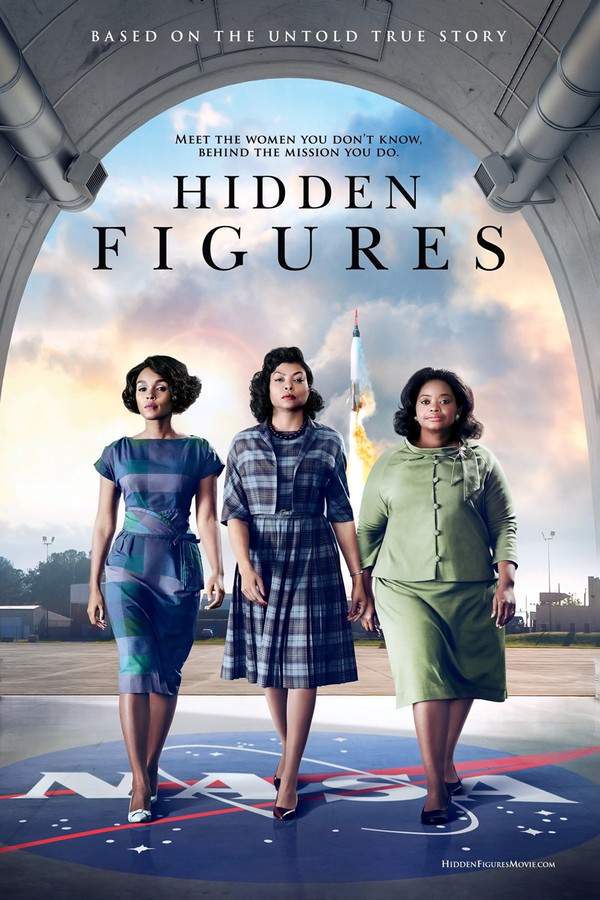
Hidden Figures (2016) movie poster

Timeline

Hidden Figures (2016) Timeline Explained – Every Event in Order

Release, runtime and language
2016 · 127 min · English
Loading streaming availability…
Directed by
Theodore Melfi
Starring
Octavia Spencer, Taraji P. Henson, Kevin Costner, Janelle Monáe
Budget
$25M

During the Space Race of the Cold War, NASA's ambition to explore space relies on a team of brilliant African-American women. Dorothy Vaughn, Mary Jackson, and Katherine Johnson overcome racial and gender barriers to become the agency's vital "human computers," performing complex calculations that are crucial to some of the most significant achievements in American space exploration. Their contributions are essential to the success of early space missions, and their story highlights a pivotal moment in U.S. history.

On this page (7)
  1. 1 Where to watch
  2. 2 Events in order (13)
  3. 3 Timeline questions answered
  4. 4 The book behind the movie
  5. 5 Movie threads
  6. 6 Movies like Hidden Figures
  7. 7 Every angle
Loading streaming availability…

13 events in order · contains spoilers

Hidden Figures Timeline: Events in Chronological Order

Every key event of Hidden Figures (2016) in order, scene by scene, with when and where it takes place. Use it to untangle flashbacks, time jumps and parallel storylines, to refresh your memory before the sequel or to find the exact scene you are thinking of.

  1. Katherine Joins Langley Research Center

    In 1961, Katherine Goble Johnson begins her work at Langley Research Center in Hampton, Virginia, amidst a landscape deeply divided by race and gender. As one of the few African-American women in her field, she navigates the challenges and barriers that come with her position while demonstrating exceptional talent in mathematics.

    When
    1961
    Where
    Langley Research Center, Hampton, Virginia
  2. The Space Task Group

    Katherine's mathematical skills catch the attention of Al Harrison, leading to her placement in the Space Task Group. As the first Black woman on the team, she contends with skepticism and hostility from some colleagues, particularly engineer Paul Stafford, who underestimates her contributions.

    Where
    Langley Research Center
  3. Mary Jackson's Assignment

    Mary Jackson is assigned to the space capsule heat shield team, where she quickly identifies a critical design flaw. Encouraged by her team leader, Karl Zielinski, she pursues an engineering position at NASA despite facing significant obstacles and bias regarding her educational background.

    Where
    Langley Research Center
  4. Mary Jackson's Petition

    Demonstrating unyielding determination, Mary Jackson petitions to attend all-white night classes at Hampton High School to further her education. She appeals to a local judge's sense of justice and history, ultimately gaining permission despite resistance from her husband.

    Where
    Hampton High School
  5. Katherine's Mathematical Breakthrough

    Katherine impressively solves a complex equation taken from redacted documents, showcasing her exceptional analytical skills. This moment solidifies her importance to the team as the impending space race against the Soviet Union intensifies.

    Where
    Langley Research Center
  6. The Segregated Restroom Incident

    A significant turning point occurs when Al Harrison confronts Katherine about her frequent 'breaks.' She reveals the injustices she faces, including having to walk half a mile to the restroom designated for people of color, prompting Harrison to eliminate the segregated restroom signs.

    Where
    Langley Research Center
  7. Katherine's Recognition

    Following Harrison's support, Katherine is included in high-stakes meetings, enhancing her visibility and role within the Space Task Group. She proves her value as the team works on critical calculations for the upcoming space missions, notably during John Glenn's launch preparations.

    Where
    Langley Research Center
  8. Katherine vs. Paul Stafford

    Despite her monumental contributions, Katherine faces resentment from Paul Stafford, who attempts to obscure her role by claiming that 'computers' cannot draft reports. Katherine remains determined to showcase her capabilities and the importance of her work.

    Where
    Langley Research Center
  9. Dorothy Vaughan Embraces Technology

    Recognizing the impact of the IBM 7090 electronic computer, Dorothy Vaughan delves into programming to secure a future for herself and her fellow human computers. She covertly learns Fortran and prepares her coworkers for the technological transitions at NASA.

    Where
    Langley Research Center
  10. John Glenn's Friendship 7 Mission

    As launch day approaches for John Glenn's Friendship 7 mission, Katherine is moved to support this critical mission. Her analytical prowess helps address discrepancies in calculations, ultimately ensuring the mission's success as she enters the control room to contribute vital data.

    Where
    NASA Control Room
  11. Legacy of the Human Computers

    As technology replaces human computers, the legacies of Dorothy, Katherine, and Mary continue to thrive. They each break barriers in their respective fields, with Mary becoming NASA's first African American female engineer and Dorothy the first African American supervisor.

  12. Katherine's Lasting Impact

    Katherine Johnson's significant contributions culminate in her co-authoring reports and computing crucial trajectories for historic missions like Apollo 11. Her work in mathematics and space exploration is recognized when she receives the Presidential Medal of Freedom in 2015.

    When
    2015
  13. Honoring Katherine Johnson

    In 2016, NASA honors Katherine's remarkable legacy by naming the Katherine Johnson Computational Building at Langley Research Center in her honor. This tribute highlights not only her brilliance in mathematics but also her profound impact on the field of aerospace engineering.

    When
    2016
    Where
    Langley Research Center

Last updated: November 22, 2024 at 16:00

Was this helpful?

Timeline questions answered

Hidden Figures Timeline Explained: Your Questions Answered

When does it happen, and why in that order? The questions people ask about the chronology of Hidden Figures (2016): time jumps, flashbacks, cause and effect between scenes and the correct order of events, each answered with spoilers.

Q1

Why did Katherine Johnson have to walk half a mile to use the restroom?

Katherine Johnson was required to use the segregated restroom designated for African-American employees, which was located half a mile from the Space Task Group's workspace. This was due to the racial segregation policies at Langley Research Center in 1961, which forced Black employees to walk long distances to access separate facilities. When Al Harrison confronted her about taking frequent breaks, she explained this daily discrimination, leading Harrison to remove the "colored" restroom signage.

  • katherine johnson
  • segregated restroom
  • langley research center
  • discrimination
  • al harrison
Q2

Why was Katherine Johnson brought into the Space Task Group?

Katherine Johnson was added to Al Harrison's Space Task Group because of her exceptional skills in analytic geometry. Her mathematical abilities caught Harrison's attention, making her the first Black woman assigned to the team. Despite skepticism from colleagues like Paul Stafford, her talent proved essential for performing the complex calculations needed for NASA's early space missions.

  • katherine johnson
  • space task group
  • al harrison
  • analytic geometry
  • NASA calculations
Q3

Why did Al Harrison remove the segregated restroom signs?

After confronting Katherine Johnson about her frequent breaks, Harrison learned about the daily discrimination she faced, including having to walk half a mile to use the restroom designated for African-Americans. Moved by her heartfelt explanation, Harrison took the bold step of removing the "colored" restroom signs, eliminating segregation from the workspace and signaling his support for Katherine.

  • al harrison
  • segregated restrooms
  • langley research center
  • katherine johnson
  • segregation
Q4

Why did Mary Jackson want to attend night classes at Hampton High School?

Mary Jackson needed to complete additional engineering coursework to qualify for a NASA engineering position. Since her previous education was not recognized by NASA's standards, she petitioned to attend all-white night classes at Hampton High School to earn the credentials required. She convinced a local judge to grant permission by appealing to his sense of justice and historical responsibility.

  • mary jackson
  • night classes
  • hampton high school
  • engineering degree
  • NASA career
Q5

Why was Dorothy Vaughan learning to program the IBM 7090?

Dorothy Vaughan recognized that the IBM 7090 electronic computer threatened to replace human computers at NASA. To protect her team from becoming obsolete, she secretly learned Fortran programming and taught these skills to her fellow West Area coworkers. This proactive approach helped secure her team's future and eventually led to her becoming NASA's first African-American supervisor.

  • dorothy vaughn
  • IBM 7090
  • fortran programming
  • human computers
  • NASA technology
Q6

Why was Katherine Johnson essential to John Glenn's Friendship 7 mission?

When discrepancies arose in the IBM 7090's calculations for John Glenn's orbital flight, Katherine Johnson's precise mathematical skills proved invaluable. She was moved from the Programming Department to support the Friendship 7 mission, where she verified the calculations and provided critical data that ensured the capsule's safe re-entry, ultimately helping the mission succeed.

  • katherine johnson
  • john glenn
  • friendship 7
  • IBM calculations
  • orbital mission
Q7

Why did Paul Stafford try to prevent Katherine Johnson from receiving credit for her work?

Paul Stafford, an engineer on the Space Task Group, represented the systemic racism and sexism of the era. He insisted that "computers" could not draft reports and attempted to claim Katherine Johnson's mathematical contributions as his own. This was a reflection of the broader discrimination faced by Black women at NASA, where their work was often overlooked or appropriated by white male colleagues.

  • paul stafford
  • katherine johnson
  • racism
  • nasa discrimination
  • workplace prejudice
Q8

How did Katherine Johnson prove herself to Al Harrison?

Katherine Johnson demonstrated her exceptional value by solving a complex equation lifted from redacted documents that other engineers could not complete. This impressive display of analytical geometry skills convinced Al Harrison of her indispensable worth to the team, particularly as the Space Race against the Soviet Union intensified following Yuri Gagarin's successful orbital flight.

  • katherine johnson
  • al harrison
  • redacted documents
  • analytic geometry
  • space race
Q9

Why was Katherine Johnson allowed in high-stakes meetings after the restroom incident?

After Al Harrison removed the segregated restroom signs in response to Katherine Johnson's explanation of her daily discrimination, he began including her in critical meetings previously reserved for senior engineers. This symbolized a significant advancement in her recognition and role within the Space Task Group, allowing her to contribute to crucial calculations for the space capsule's re-entry point.

  • katherine johnson
  • al harrison
  • high-stakes meetings
  • re-entry calculations
  • NASA space mission
Q10

What happened to Katherine Johnson, Dorothy Vaughan, and Mary Jackson after the movie?

The three women each broke significant barriers: Mary Jackson became NASA's first African-American female engineer after earning her engineering degree; Dorothy Vaughan became NASA's first African-American supervisor, leading the Programming Department; Katherine Johnson co-authored crucial reports and calculated trajectories for Apollo 11 and Space Shuttle missions, receiving the Presidential Medal of Freedom in 2015. In 2016, NASA honored her by naming a computational building at Langley after her.

  • katherine johnson
  • dorothy vaughn
  • mary jackson
  • legacy
  • presidential medal of freedom
  • NASA engineer

Movie threads

More Movies Like Hidden Figures, by Mood & Story

Curated lists built around what makes Hidden Figures tick: the same mood, the same kind of story or the same emotional payoff. Each list explains why these movies belong together.

Inspiring Triumphs Against Adversity like in Hidden Figures

True stories of brilliance and perseverance overcoming systemic barriers. If you liked Hidden Figures, explore more movies about real people who overcame significant societal obstacles to achieve greatness. These films balance serious subject matter with an ultimately hopeful and triumphant tone, celebrating resilience and intellectual achievement.

  • uplifting
  • inspiring
  • determined
  • triumphant
  • dignified
  • thought-provoking
  • Tone: hopeful, inspiring, determined
  • Pacing: steady, character-driven
Why these movies?

The story pattern: These narratives typically follow a linear, biographical structure chronicling the protagonist's journey as they face discrimination or other major hurdles. The central conflict is external societal injustice, with the emotional arc building towards a cathartic and well-earned victory that honors their legacy.

Why they belong together: These films are grouped by their shared focus on historically marginalized individuals achieving monumental success. They create a specific, uplifting mood by balancing the weight of injustice with the inspirational payoff of overcoming it, offering a steady-paced and hopeful emotional journey.


Movies about Intellectual Heroes like in Hidden Figures

Stories of quiet geniuses proving their worth within large, challenging institutions. Find movies similar to Hidden Figures that celebrate intellectual achievement and workplace perseverance. These films focus on brilliant protagonists, often in technical or scientific fields, who must prove their value within large organizations against all odds.

  • intellectual
  • determined
  • workplace drama
  • perseverance
  • scientific
  • vindication
  • Tone: determined, thoughtful, triumphant
  • Pacing: steady, deliberate
Why these movies?

The story pattern: The plot revolves around a central character or group whose specialized skills are vital to a high-stakes mission or project. The primary conflict involves proving their competence and worth to skeptical superiors within a bureaucratic or institutional setting. The resolution is a professional vindication that affirms their crucial role.

Why they belong together: Movies here share a core theme of intellectual brilliance as a form of empowerment. They provide a satisfying, steady-paced narrative about earning respect through competence, set against a backdrop of high-stakes professional endeavors like scientific discovery or historical events.

If you liked this

Movies Like Hidden Figures

Similar movies to Hidden Figures: the same genre, themes or kind of story. Each one comes with its own plot summary, timeline and ending explained.

Browse all movie summaries

Every angle

Hidden Figures (2016) Explained: Plot, Timeline & Characters

Everything about Hidden Figures in one place: what happens in the plot summary, the timeline in chronological order, the characters and meaning and a spoiler-free summary. What's After the Movie adds the cast, box office and post-credit scenes.

Coming soon on iOS and Android

The Plot Explained Movie Summary App

Plot summaries, endings explained and timelines on your phone. Catch up on any movie in minutes, save your favorites and never miss a twist again.

Be the first to know when we launch. Your email stays private, always.

Learn more about the app