Plot Explained Spoilers guaranteed!
Plot Explained

Browse by genre

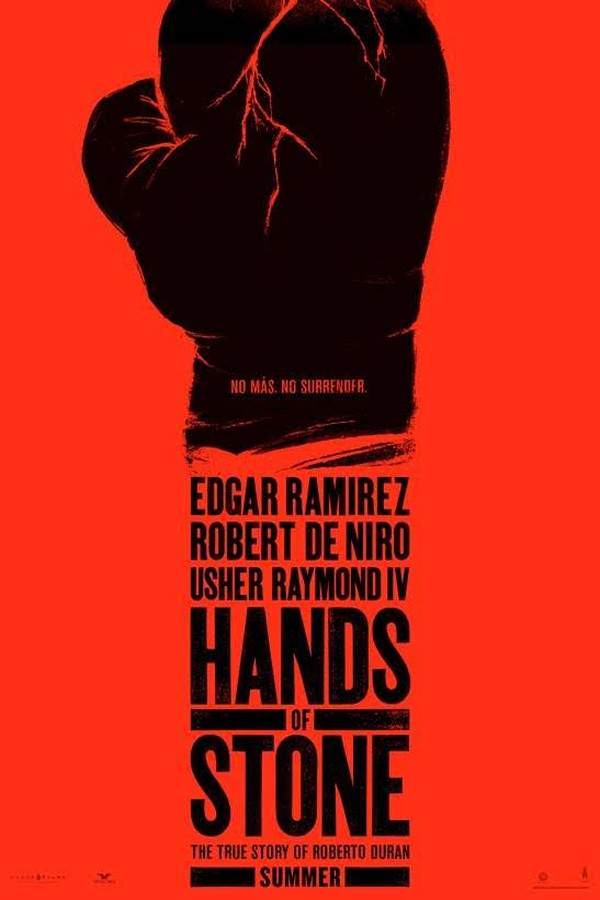
Hands of Stone (2016) movie poster

Plot Summary

Hands of Stone (2016) Plot Summary Explained

Release, runtime and language
2016 · 111 min · English
JustWatch #3,123 3
Directed by
Jonathan Jakubowicz
Starring
Robert De Niro, Édgar Ramírez, Usher Raymond

This gripping biopic chronicles the extraordinary career of Roberto Duran, a legendary Panamanian boxer. Witness his journey from a teenage debut to a remarkable, decades-long career filled with electrifying wins and devastating losses. The film focuses on his rivalry with Sugar Ray Leonard, highlighted by a historic defeat and a controversial surrender in their rematch, famously known as "no mas," cementing Duran's place in boxing history.

On this page (6)
  1. 1 Where to watch
  2. 2 What happens: full plot
  3. 3 Plot questions answered
  4. 4 Movie threads
  5. 5 Movies like Hands of Stone
  6. 6 Every angle

Where to watch

Where to Watch Hands of Stone (2016)

Where can you watch Hands of Stone? Stream, rent or buy it in the US, including on Amazon Prime Video, Amazon MX Player and Amazon Prime Video Free: current JustWatch availability with up-to-date prices.

Streaming availability powered by JustWatch

Full plot summary · contains spoilers

What Happens in Hands of Stone: Full Plot Summary

The whole story of Hands of Stone (2016) explained, from the opening scene to the final frame: every key event, every twist and what it all adds up to. Read it as a quick recap before the sequel, to check a scene you missed, or to finally understand what really happened.

As Roberto Durán's early years unfold in Panama, he benefits from the mentorship of Chaflan, who shares crucial life lessons that shape his future. Ultimately, Durán finds his calling in a boxing club, coming under the guidance of coach Nestor "Plomo" Quiñones.

At the age of 20, he catches the attention of the iconic American trainer Ray Arcel. Arcel, whose life took a violent turn due to a brutal assault by Frankie Carbo's henchmen in New York City during 1953, sees the raw talent and impressive punching power in this young boxer, and decides to mentor him to achieve greater heights in the sport.

During these formative years, Durán also meets Felicidad, a student who will eventually become the mother of their five children. As he charts his path through the vibrant boxing scene in the 1970s and 1980s, Durán's remarkable success—with only one defeat—catapults him through the weight classes. In a bold move, he challenges Sugar Ray Leonard, recognized as the "Fighter of the Year," in a match that promises to be a spectacle capturing widespread attention.

Tensions escalate when Durán, in a moment of bravado, refers to Leonard as a "clown" and boldly predicts he will win by knockout. This hostility intensifies when Durán goes so far as to insult Leonard's wife publicly, inciting outrage and controversy.

His disdain for Leonard appears to have deep roots, traceable to his resentment toward Americans and their treatment of Panama during the turbulent events surrounding the Panama Canal in 1964. This historical bitterness is exacerbated by memories of American military presence, which stoked animosity between the nations.

In June 1980, Durán and Leonard clash in a welterweight championship showdown in Montreal. Defying the odds as the underdog, Durán pulls off an impressive victory by unanimous decision (148–147, 145–144, 146–144). Following this thrilling win, Leonard, unfazed by the prior insults, calls for a highly lucrative rematch worth $8 million. However, at a house party, Durán, heavily intoxicated, is told about Leonard's challenge by his manager, Carlos Eleta, yet is in no condition to respond. After reluctantly agreeing to the rematch, a drunken confrontation leads to Chaflan being kicked out, leaving him to struggle on the streets.

As time passes, Chaflan faces increasing hardship, resorting to theft just to survive. Tragically, his fate is sealed one fateful night when he is struck by a truck while trying to evade the consequences of his dire situation, leading to his heartbreaking end.

The anticipation builds for the rematch between Durán and Leonard in November 1980 in New Orleans. Yet, in a shocking turn of events during the eighth round, Durán suddenly quits the match, proclaiming > "No más" (English: "I will not continue") to the referee. This surprising decision infuriates the Panamanian public and results in Leonard being declared the winner by technical knockout (68–66, 68–66, and 67–66).

Returning to Panama, Durán is met with a wave of discontent from his compatriots. Faced with the weight of his disappointing choices and the disappointment from those who once idolized him, he confides to his wife that he longs for redemption, yearning to reclaim his former glory and regain the love of his fans. This realization spurs Arcel to step back, passing the coaching responsibilities to Plomo, in preparation for Durán's comeback.

A pivotal moment occurs in June 1983 when Durán unexpectedly encounters Leonard in New York City after their rematch, resulting in a poignant exchange. With his wife's forgiveness now in hand, Durán is ready to rejuvenate his career and restore his tarnished reputation.

Set for a triumphant return, Durán inches toward glory as he squares off against Davey Moore in the eighth round, with Leonard present, providing real-time commentary from ringside. In a pivotal bout, Durán emerges victorious via technical knockout, reclaiming his cherished status in Panama, and regaining both dignity and popularity.

In the touching finale, Plomo remains a dedicated presence in Durán's life until his passing in 2012. Meanwhile, the bond between Leonard and Durán flourishes into a lasting friendship, and Arcel is honored with inductions into both the World Boxing Hall of Fame (WBHF) and the International Boxing Hall of Fame (IBHF). His life is remembered as a testament to resilience, culminating in a six-year battle against leukemia, until he eventually succumbs to the disease on March 7, 1994, at the age of 94.
Last updated: November 19, 2024 at 21:04

Was this helpful?

Plot questions answered

Hands of Stone Plot Explained: Your Questions Answered

The questions people ask most about Hands of Stone (2016): what happens in the confusing scenes, why the characters do what they do, the twists, hidden details and what the ending means. Each answer contains spoilers.

Q1

Why did Roberto Durán call Sugar Ray Leonard a "clown"?

Durán's insult was rooted in deep-seated resentment toward Americans, stemming from the 1964 Panama Canal incident and the long history of American military presence in Panama. This nationalistic anger, combined with his自信 personality, led him to publicly mock Leonard as a "clown" and predict a knockout victory. The hostility was amplified when Durán also insulted Leonard's wife publicly, creating intense tension before their first fight.

Foreshadowing: The film establishes Durán's anti-American sentiment early through references to the Panama Canal events of 1964.

  • roberto duran
  • sugar ray leonard
  • insult
  • trash talk
  • panama canal
Q2

Why did Roberto Durán say "No más" and quit against Sugar Ray Leonard?

During the eighth round of their November 1980 rematch in New Orleans, Durán suddenly quit, telling the referee "No más" (meaning "I will not continue"). While the exact reason is debated, factors include extreme fatigue, frustration with Leonard's defensive fighting style, and the overwhelming pressure of the moment. The sudden decision shocked the boxing world and enraged Panamanian fans who had high expectations after his first victory.

Foreshadowing: Earlier scenes show Durán at a house party, heavily intoxicated when told about Leonard's rematch offer, suggesting he was not in the right mental or physical state.

  • no mas
  • quit
  • rematch
  • new orleans
  • 1980
Q3

What happened in the first fight between Roberto Durán and Sugar Ray Leonard in Montreal?

In June 1980, Durán faced Leonard in a welterweight championship match in Montreal. Despite being the underdog, Durán pulled off an impressive victory by unanimous decision with scores of 148–147, 145–144, and 146–144. This win established Durán as a top fighter and set up the highly anticipated rematch later that year.

Foreshadowing: The film builds tension through Durán's bold challenge and his public insults toward Leonard, making the unexpected outcome more dramatic.

  • montreal
  • june 1980
  • unanimous decision
  • underdog
Q4

What happened to Chaflan after he was kicked out of Durán's house?

After a drunken confrontation at a house party, Chaflan was kicked out of Durán's home. Struggling to survive on the streets, Chaflan eventually turned to theft. His tragic end came one night when he was struck by a truck while trying to evade the consequences of his desperate situation, marking a heartbreaking conclusion to the mentor's story.

Foreshadowing: The film shows Chaflan sharing crucial life lessons with young Durán, establishing their deep bond before the falling out.

  • chaflan
  • death
  • mentor
  • truck
Q5

How did Roberto Durán make a comeback after the "No más" fight?

After the public shame of quitting against Leonard, Durán returned to Panama facing massive disappointment from his fans. He confided to his wife about wanting redemption, and with her forgiveness, he prepared for his return. In June 1983, Durán unexpectedly encountered Leonard in New York City, receiving encouragement. He then fought Davey Moore, winning by technical knockout in the eighth round to reclaim his status in Panama and restore his dignity and popularity.

Foreshadowing: The film shows Arcel stepping back and letting Plomo take over coaching duties, signaling a transition in Durán's career before the comeback.

  • comeback
  • davey moore
  • redemption
  • technical knockout
Q6

What was the relationship like between Roberto Durán and Sugar Ray Leonard after their rivalry?

Despite their intense rivalry and the bitter "No más" incident, Durán and Leonard developed a lasting friendship over the years. Their bond deepened after their boxing careers ended, transforming from bitter rivals into friends who respected each other's abilities. The film concludes by highlighting this friendship as one of the positive outcomes of their storied competition.

Foreshadowing: The pivotal 1983 encounter in New York City shows a poignant exchange between the two fighters, hinting at the reconciliation to come.

  • friendship
  • legacy
  • rivalry
  • respect
Q7

Who was Ray Arcel and why was he important to Durán's career?

Ray Arcel was a legendary American trainer who discovered Durán when he was 20 years old. Arcel had survived a brutal assault by Frankie Carbo's henchmen in New York City in 1953, which had shaped his life before meeting Durán. Recognizing Durán's raw talent and impressive punching power, Arcel decided to mentor him. Arcel remained a steadfast guide throughout Durán's career and was later inducted into both the World Boxing Hall of Fame and International Boxing Hall of Fame. He passed away in 1994 after a six-year battle with leukemia at age 94.
Foreshadowing: The film establishes Arcel's tragic backstory early, making his dedication to Durán's success more meaningful.

  • ray arcel
  • trainer
  • mentor
  • hall of fame
Q8

Why did the Panamanian public react so strongly to Durán's loss to Leonard?

The Panamanian public was outraged by Durán's "No más" surrender because he had won their first fight in Montreal and was seen as a national hero representing Panama on the world stage. His sudden quitting in the rematch was perceived as a betrayal, especially given the heated rivalry and nationalistic feelings involved. The timing mattered too, Durán had been celebrated as an underdog who defeated the American champion, making his quit feel like a letdown to his entire country.

Foreshadowing: The film shows Durán's growing national fame after Montreal, building up the expectations that made his defeat more devastating.

  • panama
  • public
  • outrage
  • national hero
Q9

How did Roberto Durán meet his wife Felicidad?

During his early boxing career in Panama, Durán met Felicidad, who was a student at the time. Their relationship developed as Durán was rising through the boxing ranks in the 1970s and 1980s. Felicidad eventually became the mother of their five children and played a crucial supportive role throughout his career, especially during his lowest moments after the "No más" fight when she granted him forgiveness that helped him make his comeback.

Foreshadowing: The film hints at the importance of their relationship early, though it becomes most significant during Durán's redemption arc.

  • felicidad
  • wife
  • family
  • children
Q10

What was the historical reason behind Durán's resentment toward Americans?

Durán's hostility toward Americans, particularly toward Sugar Ray Leonard, was deeply rooted in his resentment toward U.S. treatment of Panama during the Panama Canal events of 1964. The historical bitterness was fueled by memories of American military presence in Panama, which created long-standing animosity between the nations. This cultural and political tension manifested in Durán's personal rivalry with the American boxer Leonard, making their conflict about more than just boxing, it represented deeper nationalistic sentiments.
Foreshadowing: The film establishes this historical context early, providing motivation for Durán's controversial statements and behavior.

  • panama canal
  • 1964
  • american
  • resentment
  • history

Movie threads

More Movies Like Hands of Stone, by Mood & Story

Curated lists built around what makes Hands of Stone tick: the same mood, the same kind of story or the same emotional payoff. Each list explains why these movies belong together.

Gritty Sports Redemption Movies like Hands of Stone

Intense sports dramas where great athletes fight for personal and professional redemption. If you enjoyed the intense highs and lows of Roberto Duran's journey in 'Hands of Stone,' you'll find similar stories here. This collection features movies about athletes facing dramatic falls from grace and seeking redemption, blending heavy emotional weight with gritty, realistic sports action.

  • gritty
  • triumphant
  • tragic
  • redemptive
  • determined
  • intense
  • Tone: bittersweet, intense
  • Pacing: steady, biographical
Why these movies?

The story pattern: Stories in this thread typically follow a biographical or realistic arc: a rapid rise to fame, a devastating public or personal failure that tarnishes their legacy, and a long, arduous climb back toward respect and redemption, often spurred by a key mentor or a final rivalry.

Why they belong together: Movies are grouped here because they share a specific emotional mix of triumphant victory and tragic personal cost, set against the high-stakes backdrop of professional sports. They feature a steady pacing that covers significant periods of an athlete's life, a bittersweet tone, and a heavy emotional weight driven by themes of pride, failure, and comeback.

Bittersweet Biopics with Heavy Drama like Hands of Stone

Emotionally heavy biopics that balance great achievements with profound personal costs. For viewers who appreciated the balanced portrayal of triumph and tragedy in 'Hands of Stone,' this section features similar biographical dramas. These movies explore the full, often painful complexity of a real person's life, offering a poignant and heavy viewing experience rather than a simplified hero's tale.

  • somber
  • tragic
  • redemptive
  • determined
  • gritty
  • poignant
  • Tone: bittersweet, somber
  • Pacing: steady, linear
Why these movies?

The story pattern: The narrative pattern is a linear chronicle of a life, focusing on key relationships and pivotal public moments. The journey is straightforward but deeply emotional, structured to highlight the inextricable link between the subject's greatest achievements and their most painful personal sacrifices or failures.

Why they belong together: These films are connected by their commitment to a bittersweet tone and heavy emotional weight. They share a steady, straightforward pacing suited to covering a life story, and they resonate because they honor the whole person—flaws, failures, and all—rather than presenting a sanitized version of history.

If you liked this

Movies Like Hands of Stone

Similar movies to Hands of Stone: the same genre, themes or kind of story. Each one comes with its own plot summary, timeline and ending explained.

Browse all movie summaries

Every angle

Hands of Stone (2016) Explained: Plot, Timeline & Characters

Everything about Hands of Stone in one place: what happens in the plot summary, the timeline in chronological order, the characters and meaning and a spoiler-free summary. What's After the Movie adds the cast, box office and post-credit scenes.

Coming soon on iOS and Android

The Plot Explained Movie Summary App

Plot summaries, endings explained and timelines on your phone. Catch up on any movie in minutes, save your favorites and never miss a twist again.

Be the first to know when we launch. Your email stays private, always.

Learn more about the app