Plot Explained Spoilers guaranteed!
Plot Explained

Browse by genre

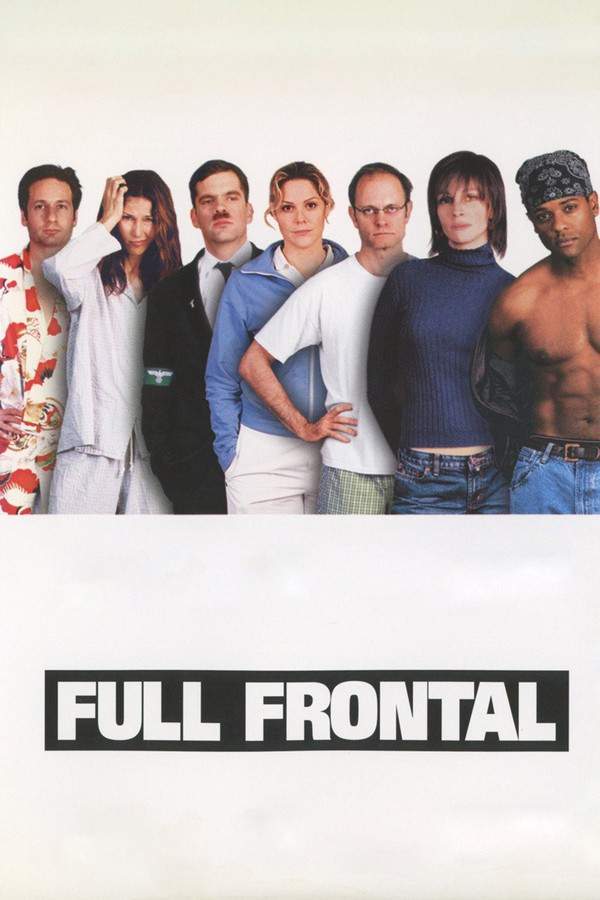
Full Frontal (2002) movie poster

Plot Summary

Full Frontal (2002) Plot Summary Explained

Release, runtime and language
2002 · 101 min · English
Directed by
Steven Soderbergh
Starring
Julia Roberts, David Hyde Pierce
Budget
$2M

A witty comedy explores the complexities of love and relationships. Linda desires affection, while Carl values his marriage with Lee. The narrative follows Catherine, who may or may not be Francesca, as she navigates a search for genuine connection. The film playfully examines the boundaries between reality and the romantic stories we create, blurring the lines between the characters and their roles.

On this page (5)
  1. 1 What happens: full plot
  2. 2 Plot questions answered
  3. 3 Movie threads
  4. 4 Movies like Full Frontal
  5. 5 Every angle

Full plot summary · contains spoilers

What Happens in Full Frontal: Full Plot Summary

The whole story of Full Frontal (2002) explained, from the opening scene to the final frame: every key event, every twist and what it all adds up to. Read it as a quick recap before the sequel, to check a scene you missed, or to finally understand what really happened.

Gus invites a diverse group of guests to his birthday party, including Calvin, who plays Nicholas — a 36-year-old actor with an unconventional view on relationships, believing that there is no such thing as bad sex. Among the attendees is Francesca, a 33-year-old movie star, completely oblivious to her considerable wealth. Other notable guests include Lee, a 41-year-old executive portrayed by Catherine Keener, who falsely believes she was personally invited by Gus, and her husband Carl, played by [David Hyde Pierce], a 42-year-old screenwriter struggling with feelings of inadequacy as he worries about being perceived as boring by his wife.

As tensions rise, we find Lee's sister, Linda (Mary McCormack), joining the festivities, hoping to find romance, as Lee secretly aims to set her up with Gus. Linda longs for affection, while Carl, despite loving Lee, feels the strain in their relationship due to her indifference. Meanwhile, Calvin, through the guise of Nicholas, finds himself unexpectedly enamored with Francesca, who’s cunningly posed as a journalist for an interview. In a world of confusion and misplaced identities, Francesca discovers genuine love amid her charade.

Carl, plagued by unsettling dreams that bleed into his waking hours, faces the harsh reality of losing his job as he's released from his duties at a magazine focused on the darker aspects of life. After a troubling revelation at home involving his dog, he connects with the veterinarian and finds fleeting solace in their honest conversation over shared brownies laced with marijuana.

On the work front, Lee is emotionally volatile, aiming to sever ties with Carl in her own explosive manner, while also dealing with the firing of several employees. Her anger surfaces when she learns of Calvin's infidelity, only exacerbated during a lunch with Linda where she criticizes last year's birthday gift but is left speechless by Linda’s present this year: a simple coin purse.

In the background of this chaos, Arty (Enrico Colantoni) tries to balance his directorial duties for a play amidst his rising tensions with a domineering actor embodying Hitler. As personal and professional lives intertwine, unexpected developments occur when Linda, now employed at a hotel, connects with Gus while providing him a massage. As she prepares to meet a man she believes to be an ideal partner, the reality of his actual identity threatens to shatter her dreams.

Meanwhile, the film within this narrative reaches its climax, with Francesca interviewing a conflicted Nicholas about the representation of African Americans in Hollywood. As their on-screen chemistry intensifies, it spills over into real-life emotions, culminating in compelling moments of connection and misunderstanding.

At the ill-fated party, as emotions intertwine and tensions peak, a tragic turn of events unfolds when Linda discovers Gus’s lifeless body. This shocking revelation beckons Lee back to Carl, sparking the hope for reconciliation. And as the sun rises on a new day, the characters must confront their realities and the impact of their choices amidst the whirlwind of relationships and desires.
Last updated: November 03, 2024 at 14:32

Was this helpful?

Plot questions answered

Full Frontal Plot Explained: Your Questions Answered

The questions people ask most about Full Frontal (2002): what happens in the confusing scenes, why the characters do what they do, the twists, hidden details and what the ending means. Each answer contains spoilers.

Q1

Why does Francesca pretend to be a journalist at the party?

Francesca poses as a journalist to interview Calvin, who is playing the character Nicholas in a film within the movie. This charade allows her to get close to him under a false pretext, leading to genuine romantic chemistry that develops between them as they discuss serious topics like Hollywood's representation of African Americans.

  • francesca
  • journalist
  • calvin
  • nicholas
  • interview
  • masquerade
Q2

How does Linda end up meeting Gus at the spa?

Linda gets a job at a hotel and works providing massages. During one of these sessions, she meets Gus and connects with him beyond her sister Lee's matchmaking scheme. This encounter gives Linda hope that she has finally found the romantic connection she desperately seeks.

Foreshadowing: Earlier at the party, Lee secretly aims to set Linda up with Gus, but Linda finds her own way to meet him.

  • linda
  • gus
  • massage
  • spa
  • romance
  • connection
Q3

What happens to Gus at the birthday party?

Gus dies at his own birthday party. Linda discovers his lifeless body, which shocks all the guests and serves as the tragic turning point that forces the characters to confront their relationships and choices.

  • gus
  • death
  • party
  • body
  • tragedy
Q4

Why does Lee decide to reconcile with Carl after Gus's death?

Gus's death serves as a wake-up call for Lee, reminding her of the fragility of life and what truly matters. This tragedy prompts her to reconsider her decision to leave Carl and sparks the hope for reconciliation between them.

Foreshadowing: Lee had been emotionally volatile throughout the party, aiming to end her marriage with Carl in an explosive manner, but the tragedy shifts her perspective.

  • lee
  • carl
  • reconciliation
  • death
  • gus
  • marriage
Q5

Why does Carl lose his job at the magazine?

Carl is fired from his position at a magazine that focuses on the darker aspects of life. His insecurity about being perceived as boring by his wife Lee compounds his professional struggles, and losing his job adds to the mounting pressures he faces throughout the movie.

  • carl
  • job
  • loss
  • fired
  • magazine
Q6

Why does Calvin's character Nicholas fall for Francesca?

During the interview, Francesca and Nicholas discuss meaningful topics like racial representation in Hollywood, which creates genuine intellectual and emotional chemistry between them. This connection transcends their fabricated roles and leads to real feelings developing between the characters and potentially the actors themselves.

Foreshadowing: Francesca's charade as a journalist was meant to be purely strategic, but the depth of their conversation changes everything.

  • calvin
  • nicholas
  • francesca
  • romance
  • interview
  • chemistry
Q7

Why does Linda give Lee a coin purse as a birthday gift?

Linda gives Lee a simple coin purse as her birthday gift for the previous year, which she presents during a lunch. The humble gesture contrasts sharply with Lee's critical reaction to last year's gift and leaves Lee speechless this year, highlighting the emotional distance between the sisters.

  • linda
  • lee
  • coin purse
  • gift
  • sisters
Q8

How does the film-within-a-film element work in this movie?

The movie features Calvin playing a character named Nicholas who believes there is no such thing as bad sex, while Francesca poses as a journalist interviewing him. Their on-screen chemistry blurs the lines between performance and reality, as genuine emotions develop between the characters and potentially spill over into the actors' real lives.

Foreshadowing: The structure is established from the party scene where Calvin declares his unconventional views about relationships.

  • film within film
  • nicholas
  • calvin
  • francesca
  • performance
  • meta
Q9

Why does Lee fire employees at her company?

Lee is shown dealing with the firing of several employees at her company while simultaneously experiencing emotional turmoil in her personal life. Her volatility and anger surface throughout the party, particularly when she learns about Calvin's infidelity, which exacerbates her already unstable emotional state.

  • lee
  • employees
  • firing
  • company
  • anger
Q10

Why does Carl visit the veterinarian after losing his job?

After being fired from his magazine job and experiencing troubling dreams, Carl faces further distress at home involving his dog. These events lead him to seek comfort from the veterinarian, with whom he shares brownies laced with marijuana, finding brief solace in their honest conversation.

  • carl
  • veterinarian
  • brownies
  • marijuana
  • dog
Q11

Why does Lee get angry about Calvin's infidelity?

Lee's anger about Calvin's infidelity surfaces during a lunch with Linda, intensifying her already volatile emotional state. This revelation adds to her explosive behavior throughout the party and contributes to her overall emotional instability during the gathering.

  • lee
  • calvin
  • infidelity
  • anger
  • affair
Q12

Why does Arty struggle with the actor playing Hitler in his play?

Arty, a director, tries to manage his theatrical production while dealing with tension from a domineering actor who portrays Hitler. This subplot reflects the broader chaos experienced by other characters as they navigate their professional and personal challenges.

  • arty
  • director
  • hitler
  • play
  • theater
  • actor

Movie threads

More Movies Like Full Frontal, by Mood & Story

Curated lists built around what makes Full Frontal tick: the same mood, the same kind of story or the same emotional payoff. Each list explains why these movies belong together.

Anxious Relationship Dramas like Full Frontal

Character-driven stories where love and identity unravel in a confused, yearning haze. If you enjoyed the bittersweet and introspective exploration of love in Full Frontal, this thread gathers similar movies about complex relationships, identity crises, and the yearning for genuine connection. Discover other films that blend emotional weight with clever, character-driven drama.

  • introspective
  • yearning
  • anxious
  • unraveling
  • satirical
  • confused
  • Tone: bittersweet, satirical
  • Pacing: variable, character-driven
Why these movies?

The story pattern: These narratives typically follow a group of interconnected characters as they navigate the gap between their romantic ideals and the complexities of their real lives. The journey often involves infidelity, midlife crises, and a profound search for meaning, culminating in resolutions that are emotionally realistic rather than neatly tied-up.

Why they belong together: These films are grouped together for their shared focus on the anxious, introspective mood of romantic disillusionment. They feature a bittersweet tone, medium emotional weight, and character arcs centered on the struggle to reconcile performance with reality in personal relationships.

Meta-Fictional Movies like Full Frontal

Films that playfully deconstruct storytelling, questioning the lines between character and actor. Fans of the clever, layered structure of Full Frontal will enjoy this collection of meta-fictional films. These movies break the fourth wall, feature stories about storytelling, and blur the boundaries between reality and performance, offering a similarly complex and intellectually stimulating experience.

  • meta
  • satirical
  • unconventional
  • intellectual
  • deconstructive
  • playful
  • Tone: satirical, introspective
  • Pacing: variable, unconventional
Why these movies?

The story pattern: The narrative pattern involves a layered structure, often juxtaposing a 'real' story with a fictional one being created within the film. This creates tension and thematic resonance as the lines between the two worlds blur, forcing characters—and the audience—to question what is authentic.

Why they belong together: These films are united by their complex, non-linear structures and their thematic preoccupation with the act of creation. They share a satirical, introspective mood and an intellectual playfulness that challenges conventional storytelling.

If you liked this

Movies Like Full Frontal

Similar movies to Full Frontal: the same genre, themes or kind of story. Each one comes with its own plot summary, timeline and ending explained.

Browse all movie summaries

Every angle

Full Frontal (2002) Explained: Plot, Timeline & Characters

Everything about Full Frontal in one place: what happens in the plot summary, the timeline in chronological order, the characters and meaning and a spoiler-free summary. What's After the Movie adds the cast, box office and post-credit scenes.

Coming soon on iOS and Android

The Plot Explained Movie Summary App

Plot summaries, endings explained and timelines on your phone. Catch up on any movie in minutes, save your favorites and never miss a twist again.

Be the first to know when we launch. Your email stays private, always.

Learn more about the app