





Plot Explained Spoilers guaranteed!
Plot Explained

Browse by genre

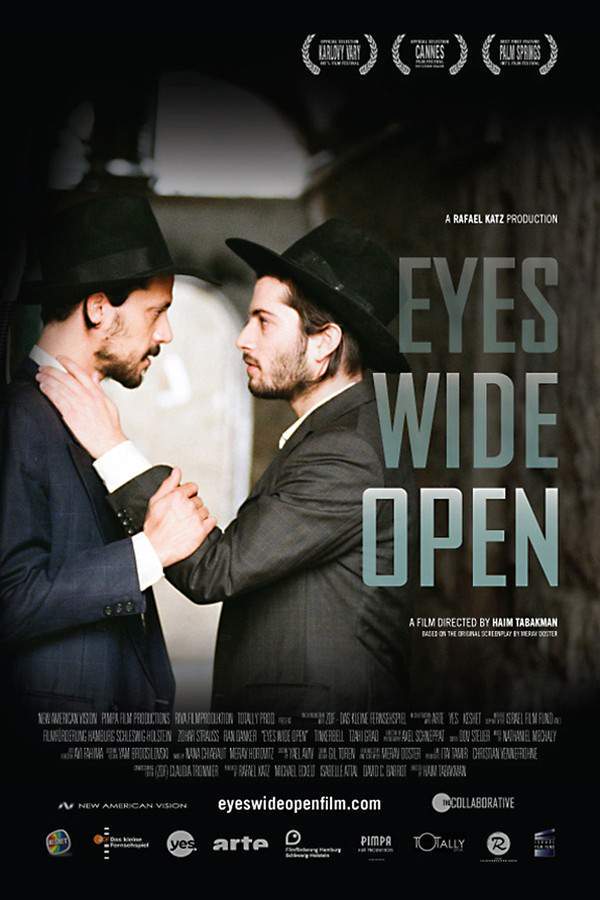
Eyes Wide Open (2010) movie poster

Timeline

Eyes Wide Open (2010) Timeline Explained – Every Event in Order

Release, runtime and language
2010 · 90 min · Hebrew
Directed by
Haim Tabakman

Within Jerusalem's insular ultra-orthodox community, a devout butcher named Aaron finds himself captivated by Ezri, a charismatic student. He abandons his family and deeply held traditions, consumed by a passionate and forbidden love. As their secret affair progresses, the immense pressure of societal expectations and the burden of guilt threaten to overwhelm them, forcing a reckoning with the painful consequences of their choices and the potential destruction of their worlds.

On this page (6)
  1. 1 Where to watch
  2. 2 Events in order (12)
  3. 3 Timeline questions answered
  4. 4 Movie threads
  5. 5 Movies like Eyes Wide Open
  6. 6 Every angle

Where to watch

Where to Watch Eyes Wide Open (2010)

Where can you watch Eyes Wide Open? Stream, rent or buy it in the US, including on Echoboom Amazon Channel , Fandango at Home Free and Pluto TV: current JustWatch availability with up-to-date prices.

Streaming availability powered by JustWatch

12 events in order · contains spoilers

Eyes Wide Open Timeline: Events in Chronological Order

Every key event of Eyes Wide Open (2010) in order, scene by scene, with when and where it takes place. Use it to untangle flashbacks, time jumps and parallel storylines, to refresh your memory before the sequel or to find the exact scene you are thinking of.

  1. Aaron Inherits the Butcher Shop

    The story begins with Aaron Fleishman inheriting the family kosher butcher shop after the death of his father. This moment marks the beginning of Aaron's struggle to manage both the business and his personal desires amidst community expectations.

    Where
    Jerusalem
  2. Ezri Arrives

    Ezri, a young and vibrant Yeshiva student, enters Aaron's life, bringing an unexpected change to his previously orderly existence. Their meeting introduces new layers of emotion and conflict, challenging Aaron's perceptions of love and identity.

    Where
    Jerusalem
  3. Growing Closer to Ezri

    As Aaron and Ezri develop a deeper bond, Aaron begins to question his role within his conservative community. Their relationship signifies a turning point for Aaron, allowing him to explore his repressed feelings in a society that condemns them.

    Where
    Jerusalem
  4. Alienation from the Community

    The closeness between Aaron and Ezri leads to Aaron's growing alienation from the Orthodox community. As he grapples with his identity, he becomes increasingly isolated from both his family and peers, facing the harsh judgment of those around him.

    Where
    Jerusalem
  5. Confrontation with Rabbi Vaisben

    In a tense confrontation with Rabbi Vaisben, Aaron openly declares, “I was dead before meeting Ezri.” This pivotal moment encapsulates his despair and the consequences of loving someone deemed unacceptable by his faith.

    Where
    Jerusalem
  6. Violent Backlash from the Community

    The film illustrates the violent aspects of societal control, especially after Ezri's forced departure from the community. This act of expulsion highlights the dangers of nonconformity within the rigid structures of Orthodox Jewish life.

    Where
    Jerusalem
  7. The Descent into Despair

    As Aaron faces defections from community support, his emotional state deteriorates. The relentless societal pressure exacerbates his internal conflicts, pushing him towards a profound personal crisis.

    Where
    Jerusalem
  8. The Metaphorical Rain

    The film's setting during a dark, rainy winter serves as a metaphor for the emotional turmoil faced by Aaron and Ezri. The rain symbolizes both the cleansing rituals of their faith and the heavy burden of societal expectations that drown personal truths.

    Where
    Jerusalem
  9. Aaron's Reflection on Identity

    Throughout the narrative, Aaron reflects on his identity as a father and member of the Orthodox community while reconciling his feelings for Ezri. The struggle within him highlights the complex negotiations between desire and duty.

    Where
    Jerusalem
  10. Final Decision

    As the film progresses, Aaron must confront the stark realities of his choices. The culmination of conflicts leads him to a critical juncture where he must decide whether to embrace his true self or conform to societal pressures.

    Where
    Jerusalem
  11. Impactful Themes Resonate

    The strong performances and profound themes resonate throughout the film, leaving audiences to consider the implications of love, faith, and societal norms. It challenges viewers to reflect on the struggles faced by those in conservative communities.

  12. Aaron's Journey Concludes

    The film concludes with a powerful message about the search for identity in the face of overwhelming societal judgment. Aaron's journey leaves viewers contemplating the evolving role of the Orthodox Jewish community in modern life.

    Where
    Jerusalem

Last updated: November 04, 2024 at 01:24

Was this helpful?

Timeline questions answered

Eyes Wide Open Timeline Explained: Your Questions Answered

When does it happen, and why in that order? The questions people ask about the chronology of Eyes Wide Open (2010): time jumps, flashbacks, cause and effect between scenes and the correct order of events, each answered with spoilers.

Q1

Why does Aaron leave his family for Ezri?

Aaron leaves his family because he experiences genuine emotional awakening for the first time. In his confrontation with Rabbi Vaisben, he states, "I was dead before meeting Ezri," indicating that his previous life within the rigid Orthodox structure felt like spiritual death. The relationship with Ezri awakens his repressed identity and desires, making his conventional life unsustainable. The immense pressure from the community eventually forces Ezri's departure, but the damage to Aaron's marriage and family bonds is already done.

Foreshadowing: The film establishes early on that Aaron's life revolves entirely around the butcher shop and religious observance, suggesting his emotional emptiness before Ezri arrives.

  • aaron fleishman
  • ezri
  • forbidden love
  • orthodox community
  • family abandonment
Q2

What does Aaron mean when he says "I was dead before meeting Ezri"?

When Aaron declares "I was dead before meeting Ezri" during his confrontation with Rabbi Vaisben, he is expressing that his previous existence was spiritually hollow. Despite outwardly fulfilling every religious and familial obligation, running the kosher shop, being a husband and father, Aaron felt no authentic personal fulfillment. Meeting Ezri awakened his capacity for genuine emotion and self-recognition, making him realize he had been merely existing rather than living.

Foreshadowing: The opening scenes emphasize Aaron's routine-driven existence centered entirely around religious duty, setting up the contrast with his emotional awakening.

  • rabbi vaisben
  • aaron fleishman
  • self-identity
  • spiritual death
  • awakening
Q3

Why is Ezri forced to leave the Orthodox community?

Ezri is forced to leave because the community discovers his romantic relationship with Aaron, which violates fundamental religious and social prohibitions. The ultra-orthodox neighborhood exerts intense social control, and when their affair becomes known, the community responds with violent backlash and expulsion. Ezri's forced departure represents the extreme measures the community takes to maintain its rigid boundaries and protect against any challenge to its moral structure.

Foreshadowing: The timeline notes Aaron's growing alienation from the community as their relationship develops, foreshadowing the community's ultimate intervention.

  • ezri
  • expulsion
  • orthodox jews
  • community violence
  • forbidden relationship
Q4

What does the rain symbolize in the film?

The relentless rainy winter setting serves as a dual metaphor throughout the film. On one hand, rain connects to Jewish purification rituals, cleansing and spiritual renewal. On the other hand, the dark, unrelenting downpour represents the suffocating pressure of societal expectations that threatens to drown Aaron and Ezri. The rain intensifies the sense of emotional turmoil and reflects their internal struggle against the oppressive social environment of the Orthodox community.

Foreshadowing: The film establishes the oppressive weather from early scenes, aligning atmospheric mood with the growing tension in Aaron and Ezri's relationship.

  • rain metaphor
  • purity rituals
  • oppression
  • emotional turmoil
  • jewish symbolism
Q5

How does the Orthodox community respond to Aaron and Ezri's relationship?

The community responds with escalating hostility and social control that turns violent. As their relationship becomes known, Aaron faces increasing isolation, community members withdraw support and distances themselves. The confrontation with Rabbi Vaisben represents the institutional religious response, but the film emphasizes that social pressure extends beyond formal religious authority. The violent backlash ultimately results in Ezri's forced expulsion, demonstrating the community's determination to eliminate any threat to its moral boundaries.

Foreshadowing: The timeline documents Aaron's progressive alienation, showing the community's response develops incrementally rather than all at once.

  • orthodox community
  • social control
  • violence
  • ostracism
  • religious judgment
Q6

Why can't Aaron continue living in the community after his relationship with Ezri is revealed?

Aaron cannot continue in the community because his relationship with Ezri fundamentally violates the Orthodox moral code, and the community's response makes his presence untenable. As his affair becomes known, he loses the social support structures essential to daily life in this insular society. The pressure becomes so intense that Aaron himself reaches a breaking point. His identity as both a devout community member and a person with hidden desires becomes impossible to reconcile, forcing him to choose between his authentic self and his inherited life.

Foreshadowing: Aaron's gradual alienation from family and peers throughout the narrative builds toward this point of no return.

  • aaron fleishman
  • ostracism
  • identity conflict
  • social support
  • breaking point
Q7

What happens to Aaron and Ezri at the end of the film?

The film ends tragically, with their relationship destroyed by external pressures. Ezri is forcibly expelled from the community, and Aaron faces the consequences of his choices, loss of family, community, and identity. The summary indicates "destruction of their worlds," suggesting neither character achieves a happy resolution. The ending emphasizes the devastating toll that uncompromising religious doctrine takes on individuals who challenge its boundaries, leaving viewers with a poignant meditation on love, faith, and societal control.

Foreshadowing: The meta notes explicitly describe the ending as SAD, with high sadness scores reflecting the inevitable personal tragedy.

  • ezri
  • tragic ending
  • expulsion
  • community rejection
  • destroyed worlds
Q8

What makes Eyes Wide Open a controversial film?

Eyes Wide Open provokes controversy by depicting homosexuality within the ultra-orthodox Jewish community, exploring themes that challenge both religious orthodoxy and societal norms. The film was debuting at the Toronto International Festival and deals with a subject rarely portrayed in mainstream cinema, same-sex desire within a conservative religious environment. The intensity comes from showing how personal desire conflicts with unwavering religious doctrine, and the film doesn't shy away from depicting the violent social control that enforces conformity.

Foreshadowing: The description explicitly labels the film as "provocative," signaling from the outset its intention to challenge viewer expectations.

  • controversy
  • homosexuality
  • orthodox jews
  • religious taboo
  • provocative film
Q9

How does Aaron's internal conflict between faith and desire unfold?

Aaron's internal conflict manifests gradually throughout the film as he attempts to reconcile his deep-rooted religious identity with his emerging emotional needs. As his bond with Ezri deepens, Aaron finds himself increasingly alienated from community rituals and family connections. He struggles with guilt, societal judgment, and the fear of ostracism. The conflict reaches its peak during the Rabbi Vaisben confrontation, where Aaron must choose between his authentic self and the life he was raised to live. His statement to the rabbi represents the culmination of this internal battle.

Foreshadowing: The timeline traces Aaron's progression from questioning his role to full alienation, showing his internal conflict as a journey rather than a single moment.

  • aaron fleishman
  • identity crisis
  • faith vs desire
  • guilt
  • religious conflict
Q10

Why is Aaron inheriting the butcher shop significant to the story?

Aaron inheriting the family kosher butcher shop is significant because it represents his complete integration into the Orthodox world, the business, religious observance, and community status are all intertwined. The timing of Ezri's arrival coinciding with this inheritance creates a pivot point in Aaron's life. Taking over the shop means Aaron is now fully responsible for maintaining the traditional lifestyle, making his awakening and subsequent choices even more disruptive. The shop anchors him to his inherited identity and makes his eventual departure more devastating.

Foreshadowing: The first timeline event establishes inheritance as the story's starting point, anchoring the narrative in Aaron's conventional role.

  • kosher butcher shop
  • family tradition
  • orthodox lifestyle
  • inheritance
  • aaron fleishman

Movie threads

More Movies Like Eyes Wide Open, by Mood & Story

Curated lists built around what makes Eyes Wide Open tick: the same mood, the same kind of story or the same emotional payoff. Each list explains why these movies belong together.

Movies about forbidden love like Eyes Wide Open

Passionate affairs that risk everything in the face of rigid social rules. If you were captivated by the intense, high-stakes romance in Eyes Wide Open, this thread features movies with similar forbidden love stories. Discover dramas where characters defy rigid societal norms, religious doctrines, or cultural taboos for a passionate connection, leading to tense and emotionally heavy consequences.

  • forbidden love
  • tense
  • passionate
  • oppressive
  • claustrophobic
  • tormented
  • Tone: tense, melancholic, passionate
  • Pacing: slow, deliberate
Why these movies?

The story pattern: The narrative follows characters who find a powerful, often unexpected, love that directly contradicts the social or religious laws of their world. Their secret affair is the central plot driver, creating a constant state of tension as they navigate the danger of exposure. The story typically builds towards an inevitable, often tragic, confrontation with the society they are challenging.

Why they belong together: Movies in this thread share a core theme of love as a dangerous act of defiance. They create a similar viewing experience defined by high emotional weight, tense atmospheres, and a melancholic tone, as the characters' personal happiness is pitted against the suffocating weight of conformity and tradition.

Slow burn character tragedies like Eyes Wide Open

Deliberate, atmospheric stories of personal collapse under internal and external pressures. For viewers who appreciated the deliberate pacing and heavy emotional journey of Eyes Wide Open, this collection features similar slow burn character tragedies. These dramas focus on a protagonist's internal conflict and moral dilemmas, unfolding at a methodical pace within a tense, oppressive atmosphere towards a ultimately sad ending.

  • slow burn
  • melancholic
  • tormented
  • psychological
  • oppressive
  • tragic
  • Tone: melancholic, tense, bleak
  • Pacing: slow burn, deliberate
Why these movies?

The story pattern: The narrative pattern is a gradual, inevitable descent. A seemingly stable protagonist is confronted with a truth about themselves or a desire that conflicts with their life. The story meticulously charts their growing anguish and the compounding pressures, both internal (guilt, doubt) and external (society, family). There is no swift resolution, only a painful, drawn-out reckoning that culminates in significant personal loss.

Why they belong together: These films are grouped by their shared approach to storytelling: a slow pacing that mirrors a character's protracted suffering, a consistently high level of dramatic tension, a melancholic and oppressive mood, and a narrative commitment to exploring the painful, consequential end of a personal struggle.

If you liked this

Movies Like Eyes Wide Open

Similar movies to Eyes Wide Open: the same genre, themes or kind of story. Each one comes with its own plot summary, timeline and ending explained.

Browse all movie summaries

Every angle

Eyes Wide Open (2010) Explained: Plot, Timeline & Characters

Everything about Eyes Wide Open in one place: what happens in the plot summary, the timeline in chronological order, the characters and meaning and a spoiler-free summary. What's After the Movie adds the cast, box office and post-credit scenes.

Coming soon on iOS and Android

The Plot Explained Movie Summary App

Plot summaries, endings explained and timelines on your phone. Catch up on any movie in minutes, save your favorites and never miss a twist again.

Be the first to know when we launch. Your email stays private, always.

Learn more about the app