Plot Explained Spoilers guaranteed!
Plot Explained

Browse by genre

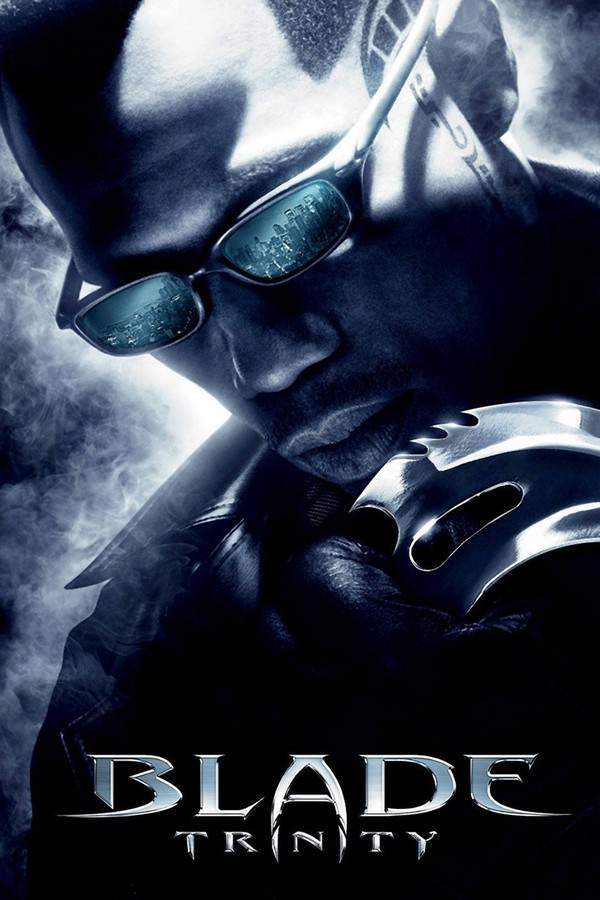
Blade: Trinity (2004) movie poster

Plot Summary

Blade: Trinity (2004) Plot Summary Explained

Release, runtime and language
2004 · 113 min · English
Directed by
David S. Goyer
Starring
Ryan Reynolds, Parker Posey, Kris Kristofferson, Dominic Purcell, Wesley Snipes, Jessica Biel
Budget
$65M

Falsely accused of crimes, the famed vampire hunter Blade is now pursued by both humans and vampires. To clear his name and restore balance, he reluctantly joins forces with a group of rebellious vampires. Together, they must confront a powerful and ancient evil threatening to engulf the world in eternal darkness, battling formidable foes and uncovering a conspiracy that reaches the highest levels of vampire society.

On this page (6)
  1. 1 Where to watch
  2. 2 What happens: full plot
  3. 3 Plot questions answered
  4. 4 Movie threads
  5. 5 Movies like Blade: Trinity
  6. 6 Every angle

Where to watch

Where to Watch Blade: Trinity (2004)

Where can you watch Blade: Trinity? Stream, rent or buy it in the US, including on Amazon Video, Apple TV Store and Fandango At Home: current JustWatch availability with up-to-date prices.

Streaming availability powered by JustWatch

Full plot summary · contains spoilers

What Happens in Blade: Trinity: Full Plot Summary

The whole story of Blade: Trinity (2004) explained, from the opening scene to the final frame: every key event, every twist and what it all adds up to. Read it as a quick recap before the sequel, to check a scene you missed, or to finally understand what really happened.

A cohort of vampires embarks on a mission to locate the concealed resting place of Drake, portrayed by Dominic Purcell, who is also known as Dracula and is regarded as the genetic "father" of their kind. They eventually discover him within an Iraqi Ziggurat tomb, but not before a moment of bloodlust leads him to kill one of their own. Capitalizing on Blade's (played by Wesley Snipes) notorious reputation as a vampire killer, they deceitfully frame him for the murder of a human by making it appear he was responsible as a vampire. Amid the ensuing manhunt, the FBI tracks down Blade's latest hideout, resulting in a siege where Abraham Whistler (portrayed by Kris Kristofferson) meets his demise, sacrificing himself to protect vital research and data. Alone and beset by human authorities, Blade opts to surrender and is taken into custody.

Following futile medical and interrogation attempts, the police prepare to transfer Blade to a group of medics who are, unbeknownst to them, actually vampires. Among them are Danica Talos, the vampire responsible for awakening Drake, her brother Asher, and Jake Grimwood, the vampire enforcer. Fortunately, Blade is rescued by Hannibal King (Ryan Reynolds) and Abigail Whistler (Jessica Biel), Abraham's daughter, both of whom are members of a vampire-hunting faction called the Nightstalkers. They inform Blade that Danica Talos, who once converted King into a vampire temporarily, has tracked down Drake. Given Drake's unique status as the progenitor of vampires, he is impervious to sunlight, and Talos hopes to use his power to eliminate Blade and transform the rest of the vampire populace into Daywalkers.

The Nightstalkers face a formidable challenge as they believe that the number of vampires is too overwhelming to combat individually. With their current strategy killing merely a few hundred each year, Sommerfield, their dedicated chemical specialist, has devised an experimental bioweapon named Daystar, an airborne virus designed to eliminate every vampire on a molecular level.

In their initial confrontation, Drake tests Blade by isolating him from King and Abigail, incapacitating King amidst the tumult. While Drake proves to be physically superior, he shares a strange bond with Blade, as both choose to be "honorable warriors" amid their kind. During a conversation, Drake wields a baby he has taken hostage as leverage, demonstrating his disdain for humanity. Meanwhile, Blade and Abigail uncover a horrific plan by the vampires for a "final solution," involving the use of blood farms where humans are kept in a vegetative state to extract blood. In a heroic act, Blade puts an end to the life support of the victims.

Upon returning, they find that all the Nightstalkers have been slaughtered, except for King and Sommerfield’s young daughter, Zoe. Using these survivors as bait, Drake lures Blade into a confrontation. After watching a posthumous message from Sommerfield, Blade discovers she has completed a small batch of Daystar, which requires Drake's blood to unleash its potential, albeit at the risk of potentially killing Blade himself. Meanwhile, King is tortured for information by Jarko Grimwood and Asher Talos, with Danica subsequently tormenting King through cruel methods.

Blade and Abigail arrive in time, leading to a fierce battle against Talos' minions and the building’s security. After successfully rescuing King and Zoe, a series of confrontations ensue where Abigail manages to take out Asher, while King dispatches Jarko. The ultimate showdown features Blade going toe-to-toe with Drake, culminating in Blade piercing Drake with Abigail's Daystar arrow, releasing the virus and annihilating the surrounding vampires, including Danica. As Drake succumbs, he acknowledges Blade's honorable conduct and warns him that the "Thirst always wins" eventually.

The story unveils multiple potential endings:

- Theatrical Ending: A nod to Blade's honorable fight results in Drake granting him a "parting gift," morphing his dying figure into a likeness of Blade. The FBI mistakenly retrieves this body, believing it to be Blade, which leads them to call off their manhunt. However, during an autopsy, Blade’s body inexplicably transforms back into Drake's form. Hannibal closes with a voiceover, confirming that Blade remains alive, continuing his battle against vampires.

- Unrated Ending: The FBI still retrieves Blade's body, but he is very much alive. As he jolts awake in the morgue, he attacks the agents, leaving the audience questioning whether he retains his humanity or has succumbed to the vampire desires foreseen by Drake.

- Werewolf Ending: The Daystar virus spreads globally, terminating all vampires, while Blade strides into the sunset, reflecting on the conclusion of his long-standing struggles. The final scene shifts focus to the Nightstalkers confronting a new menace: werewolves.

Last updated: October 27, 2024 at 22:26

Was this helpful?

Plot questions answered

Blade: Trinity Plot Explained: Your Questions Answered

The questions people ask most about Blade: Trinity (2004): what happens in the confusing scenes, why the characters do what they do, the twists, hidden details and what the ending means. Each answer contains spoilers.

Q1

Why did the vampires frame Blade for murder?

The vampires framing Blade was a calculated move to eliminate their most dangerous enemy while covering their own tracks. After one of their own vampires killed a human during the mission to find Drake, they used Blade's notorious reputation as a vampire killer to make it appear he was responsible. This/manhunt would distract authorities and give the vampires time to pursue their real goal of awakening Drake.

Foreshadowing: Earlier in the film, the vampires are shown killing humans during their search, establishing their willingness to frame others for their crimes.

  • frame blade
  • vampire conspiracy
  • murder frame
  • danica talos
Q2

How did Abraham Whistler die?

Abraham Whistler was killed during an FBI siege on Blade's hideout. When the FBI tracked down Blade's location, they launched an assault. Whistler sacrificed himself by staying behind to protect critical research and data from falling into government hands, allowing Blade to escape or be captured.

Foreshadowing: The FBI siege was set up by the manhunt that the vampires created through their framing scheme.

  • abraham whistler death
  • fbi siege
  • blade capture
  • whistler sacrifice
Q3

Why did Danica Talos wake up Drake?

Danica Talos awakened Drake, the original vampire (Dracula), because she wanted to use his unique genetic makeup to create Daywalkers, vampires who can survive in sunlight. Drake is the genetic 'father' of all vampires and is the only vampire immune to sunlight. Talos planned to use his power to eliminate Blade and transform the vampire population into Daywalkers.

Foreshadowing: The vampires' mission to find Drake in Iraq establishes early on that they seek something from their ancient progenitor.

  • danica talos
  • drake daywalker
  • vampire progenitor
  • dracula
Q4

What is Daystar and how does it work?

Daystar is an experimental bioweapon created by Sommerfield, the Nightstalkers' chemical specialist. It is an airborne virus designed to kill every vampire on a molecular level. The virus requires Drake's blood to be activated, which creates a dangerous catch-22: using it could kill Blade since he is partially vampire, but it would also destroy all vampires including Danica and her forces.

Foreshadowing: Sommerfield's work on Daystar was mentioned early as the Nightstalkers' best hope against the overwhelming vampire numbers.

  • daystar virus
  • bioweapon
  • vampire killing virus
  • sommerfield
Q5

Why does Drake want to become a Daywalker?

Drake sought to become a Daywalker to gain immunity to sunlight, which would make him virtually unstoppable. As the original vampire, he already possessed this immunity, but he wanted to share this power with other vampires to create an army that could operate freely during the day. This would give vampires total dominance over humanity.

Foreshadowing: Danica Talos explains that she woke Drake specifically to use his power to eliminate Blade and transform vampires into Daywalkers.

  • drake daywalker
  • vampire daylight
  • dracula power
  • vampire supremacy
Q6

What is the connection between Blade and Drake?

Blade and Drake share a unique bond as 'honorable warriors' among their respective kinds. Despite being enemies, they recognize something kindred in each other, both chose to live by a code rather than give in to their nature completely. Drake acknowledges Blade's honor in battle, and this respect is even shown in the endings where Drake grants Blade a 'parting gift.'

Foreshadowing: During their confrontation, Drake specifically tests Blade by isolating him and notes their shared warrior ethos.

  • blade drake connection
  • honorable warrior
  • vampire progenitor
  • thematic bond
Q7

Why were the Nightstalkers killed?

The Nightstalkers were slaughtered by Drake and his vampire forces as a trap to lure Blade into a final confrontation. Drake used King and Zoe (Sommerfield's daughter) as bait, knowing Blade would come for them. This ambush was designed to eliminate Blade once and for all while also capturing or killing the remaining Nightstalkers.

Foreshadowing: The timeline shows the Nightstalkers were ambushed after Blade and Abigail left to pursue other objectives.

  • nightstalkers killed
  • drake ambush
  • zoe grimm
  • king captured
Q8

How did Blade defeat Drake with the Daystar arrow?

Blade used Abigail's Daystar arrow to pierce Drake, releasing the virus directly into his body. Since Drake's blood was needed to activate Daystar, the moment Blade's blade pierced him, the virus was unleashed. This not only killed Drake but also annihilated all surrounding vampires, including Danica Talos and her forces.

Foreshadowing: Sommerfield's posthumous message revealed she completed a batch of Daystar that required Drake's blood to work.

  • daystar arrow
  • drake death
  • blade vs drake
  • virus release
Q9

What are the different endings of Blade: Trinity?

The film has three endings. In the theatrical version, Drake transforms into a likeness of Blade before dying, the FBI recovers this body thinking it's Blade and calls off the manhunt, but during the autopsy the body reverts to Drake's form, and Hannibal confirms Blade is still alive. In the unrated ending, Blade wakes up in the morgue alive and attacks the agents, leaving his humanity uncertain. In the werewolf ending, the Daystar virus spreads globally killing all vampires, but the final scene reveals a new threat: werewolves.
Foreshadowing: The ending was deliberately ambiguous to leave room for sequel potential and multiple interpretations.

  • blade trinity endings
  • theatrical ending
  • unrated ending
  • werewolf ending
Q10

What were the vampire blood farms?

The blood farms were the vampires' 'final solution' for maintaining their blood supply, facilities where humans were kept in a vegetative state on life support so their blood could be continuously extracted. Blade discovers this horror and, in a grim mercy, disconnects the life support to end the victims' suffering.

Foreshadowing: This revelation motivates Blade's extreme action and underscores the vampires' view of humans as mere livestock.

  • blood farms
  • human harvesting
  • vampire horror
  • final solution
Q11

What does Drake mean when he says 'The Thirst always wins'?

Drake's warning that 'The Thirst always wins' is a prophecy about Blade's eventual fate. As a half-vampire, Blade constantly battles his own vampire cravings. Drake is suggesting that no matter how honorable Blade tries to be, eventually the vampire nature within him will take over. This is partially confirmed in the unrated ending where Blade awakens in the morgue and attacks, potentially having succumbed to his vampire desires.

Foreshadowing: This warning ties into the central theme of Blade's struggle between his human and vampire sides throughout the trilogy.

  • drake thirst warning
  • blade vampire nature
  • humanity vs vampire
  • thirst meaning
Q12

Why does Hannibal King work with Blade if he was a vampire?

Hannibal King was temporarily turned into a vampire by Danica Talos, who used him as a pawn in her plans. Although he was eventually cured, he harbors deep hatred for vampires due to what was done to him. This personal vendetta, combined with his skills as a vampire hunter, drove him to join forces with Blade and the Nightstalkers to bring down Danica and her faction.

Foreshadowing: King's backstory is revealed when he and Abigail rescue Blade from the vampire transfer setup.

  • hannibal king vampire
  • danica talos
  • king backstory
  • nightstalkers origin

Movie threads

More Movies Like Blade: Trinity, by Mood & Story

Curated lists built around what makes Blade: Trinity tick: the same mood, the same kind of story or the same emotional payoff. Each list explains why these movies belong together.

Relentless Supernatural Action Movies like Blade: Trinity

Fast-moving stories where heroes battle overwhelming supernatural threats in dark worlds. If you liked the high-stakes, fast-paced supernatural combat of Blade: Trinity, you'll find more movies like it here. This list features action-packed stories with dark tones, ancient evils, and heroes fighting against overwhelming odds in a world filled with supernatural danger.

  • action-packed
  • relentless
  • tense
  • brutal
  • dark
  • urgent
  • Tone: dark, gritty, relentless
  • Pacing: fast, urgent, action-driven
Why these movies?

The story pattern: The narrative is a straightforward, urgent race against time. A clear and present supernatural threat emerges, forcing a lone hero or a reluctant team into a series of escalating, brutal confrontations. The plot is driven by action set-pieces with minimal downtime, focusing on survival and direct confrontation with the evil force.

Why they belong together: These films are grouped by their shared high intensity, fast pacing, and dark tone. They deliver a similar viewing experience focused on spectacular supernatural combat, a pervasive sense of urgency, and a world defined by a stark conflict between humanity and monstrous forces.

Movies with Framed Heroes and Reluctant Alliances like Blade: Trinity

Outcast protagonists, wrongly accused, must ally with former enemies to survive. Fans of Blade: Trinity's plot about a hunted hero forming a shaky alliance will enjoy these similar stories. Discover movies where protagonists are falsely accused and must team up with former rivals or enemies in a desperate bid for survival and redemption.

  • tense
  • gritty
  • vengeful
  • urgent
  • betrayal
  • unlikely team
  • Tone: gritty, tense, cynical
  • Pacing: fast, steady
Why these movies?

The story pattern: The journey begins with the protagonist's world turning against them due to a false accusation. Isolated and hunted, their path to redemption forces them to trust a group they would normally oppose. The narrative explores themes of betrayal and pragmatic survival, as the alliance is tested against a common, powerful enemy.

Why they belong together: This thread connects movies through a specific character and plot arc: the 'hunter becomes hunted' trope leading to a necessary but fragile alliance. They share a gritty mood, themes of betrayal and mistrust, and a focus on a protagonist operating from a position of weakness.

If you liked this

Movies Like Blade: Trinity

Similar movies to Blade: Trinity: the same genre, themes or kind of story. Each one comes with its own plot summary, timeline and ending explained.

Browse all movie summaries

Every angle

Blade: Trinity (2004) Explained: Plot, Timeline & Characters

Everything about Blade: Trinity in one place: what happens in the plot summary, the timeline in chronological order, the characters and meaning and a spoiler-free summary. What's After the Movie adds the cast, box office and post-credit scenes.

Coming soon on iOS and Android

The Plot Explained Movie Summary App

Plot summaries, endings explained and timelines on your phone. Catch up on any movie in minutes, save your favorites and never miss a twist again.

Be the first to know when we launch. Your email stays private, always.

Learn more about the app