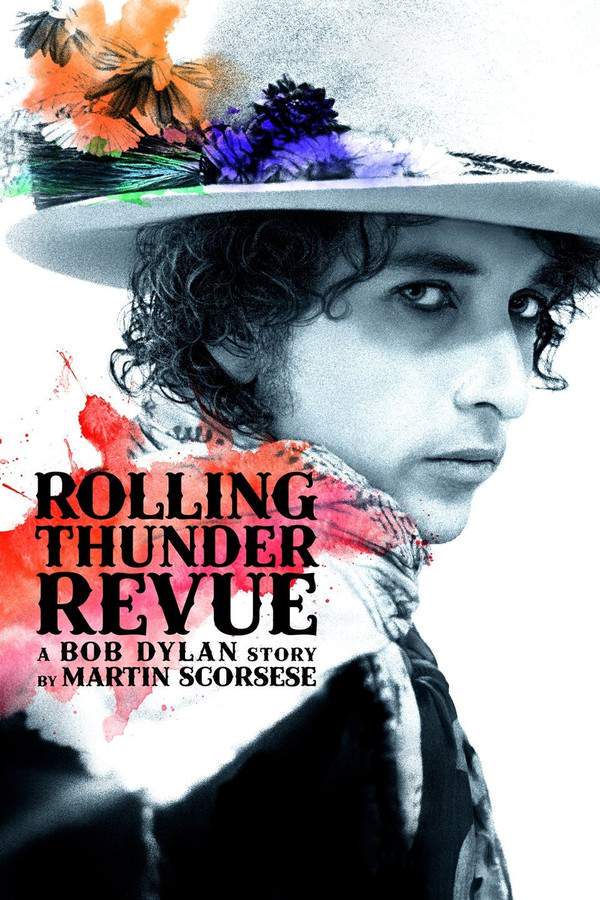
Rolling Thunder Revue: A Bob Dylan Story by Martin Scorsese

Rolling Thunder Revue: A Bob Dylan Story by Martin Scorsese

Year: 2019

Runtime: 142 min

Language: English

Director: Martin Scorsese

Echo Score: 85
BiographyMusicDocumentary

Filmmaker Martin Scorsese documents Bob Dylan’s Rolling Thunder Revue, a tour that unfolded against the backdrop of 1970s America. The film captures the vibrant atmosphere and creative energy of the revue, showcasing Dylan and a collective of musicians and actors as they navigate a landscape of social and political change. It’s a unique look at a pivotal moment in American culture, blending performance footage with behind-the-scenes glimpses of the tour’s creation.

Warning: spoilers below!

Haven’t seen Rolling Thunder Revue: A Bob Dylan Story by Martin Scorsese yet? This summary contains major spoilers. Bookmark the page, watch the movie, and come back for the full breakdown. If you're ready, scroll on and relive the story!

Timeline – Rolling Thunder Revue: A Bob Dylan Story by Martin Scorsese (2019)

Trace every key event in Rolling Thunder Revue: A Bob Dylan Story by Martin Scorsese (2019) with our detailed, chronological timeline. Perfect for unpacking nonlinear stories, spotting hidden connections, and understanding how each scene builds toward the film’s climax. Whether you're revisiting or decoding for the first time, this timeline gives you the full picture.

1

Introduction to Bob Dylan

The film opens with a modern Bob Dylan humorously expressing his confusion about the Rolling Thunder Revue. He struggles to remember the details of the tour, famously stating, 'I wasn't even born!' and dismissively notes that the essence of the tour is 'about nothing.'

2

Bicentennial Motivation

As the bicentennial of the United States approaches, the nation is engulfed in a somber mood following the Vietnam War and the Watergate scandal. Against this backdrop, Dylan feels compelled to bring together friends from the Greenwich Village coffee houses for an adventurous trip through New England and parts of Canada.

1976 United States
3

Launch of the Rolling Thunder Revue

Dylan officially kicks off the Rolling Thunder Revue, inviting a plethora of musicians and artists on his journey. This eclectic tour quickly becomes a vibrant showcase of performances, camaraderie, and artistic expression.

1976 New England and Canada
4

Filming the Journey

Stefan Van Dorp, a fictional European filmmaker, decides to document the Rolling Thunder Revue. He aims to capture both the hedonistic side of Dylan's tour and the contrasting nihilism felt in middle-class America during this turbulent era.

5

Ratso Joins the Tour

Larry 'Ratso' Sloman, a reporter from *Rolling Stone*, attempts to ingratiate himself into Dylan’s inner circle. His presence adds a journalistic perspective to the tour, as he grapples with the dynamic nature of Dylan's traveling group.

6

Sharon Stone's Role

A young Sharon Stone takes on the role of managing costumes during the tour after attending a show with her mother. She believes that Dylan's song 'Just Like a Woman' is about her, showcasing the personal connections people felt with Dylan’s music.

7

Dylan in Whiteface

In an innovative performance, Dylan adopts the persona of a character wearing Whiteface makeup onstage, inspired by violinist Scarlet Rivera. This creative choice symbolizes the intersection of dramatics and music that characterizes the tour.

8

Allen Ginsberg's Transformation

Poet Allen Ginsberg seeks to reinvent himself amidst the waning popularity of the beat poet movement. His involvement in the tour indicates a quest for identity and relevance in a changing cultural landscape.

9

Romantic Reunion with Joan Baez

Joan Baez, in a heartfelt attempt to rekindle her past romance with Dylan, joins him on stage. She dons his iconic outfit, contributing not only to the musical performances but adding emotional depth to the narrative of their complex relationship.

10

Performance at Tuscarora Reservation

Dylan pays a visit to a Tuscarora Reservation in New York, where he performs 'The Ballad of Ira Hayes.' This performance reflects his commitment to social issues and resonates with the themes of injustice prevalent throughout the tour.

Tuscarora Reservation, New York
11

Joni Mitchell's Contributing Role

Midway through the tour, Joni Mitchell joins Dylan's ensemble. Her experiences during the tour inspire her creation of the song 'Coyote', showcasing the creative synergy between the artists.

12

Advocacy for Ruben Carter

Dylan engages compassionately with record company executives to accelerate the release of his new song 'Hurricane.' Through this, he advocates for Ruben 'Hurricane' Carter, a boxer wrongly imprisoned, revealing the artist's dedication to social justice.

13

Congressman Tanner's Fictional Influence

The documentary introduces Michael Murphy portraying Congressman Jack Tanner, who whimsically suggests a narrative where he persuades President Jimmy Carter to intervene in Carter's case. This invention illustrates the reach and impact of art on real-world issues.

14

Conclusion of the Tour

As the Rolling Thunder Revue wraps up in Montreal, Van Dorp reveals his ulterior motive of claiming ownership of the tour footage. This moment encapsulates the complexities of artistic representation and individual experiences captured throughout the journey.

Montreal
15

Legacy of Dylan

The film concludes with a reflection on Dylan's relentless passion for touring, noting he has performed over 3,000 shows in four decades. This lasting commitment solidifies his legacy as an iconic figure in music history.

Last updated: November 16, 2024 at 14:52

Was this helpful?

Rolling Thunder Revue: A Bob Dylan Story by Martin Scorsese (2019) Timeline Questions Answered – Chronology FAQ

Find frequently asked questions about the Rolling Thunder Revue: A Bob Dylan Story by Martin Scorsese (2019) timeline, including chronological order, nonlinear jumps, cause-and-effect links, and scene sequence clarifications. This timeline FAQ helps explain when key events happen, how moments connect, and why the story unfolds in that specific order.

Q1

Who is Stefan Van Dorp in the documentary and is he a real filmmaker?

A.

Stefan Van Dorp is a fictional character created for the documentary. The real Rolling Thunder Revue was not documented by a European filmmaker in the way the film suggests. Van Dorp serves as a narrative device, though the behind-the-scenes footage shown is actually authentic archive material.

The film introduces Van Dorp early as the documentarian, making his fictional nature easy to miss.

stefan van dorpfictional characterfilmmakerdocumentary
Q2

Why does Bob Dylan wear whiteface makeup during performances?

A.

Dylan adopts the whiteface makeup persona inspired by violinist Scarlet Rivera, who introduced him to a Kiss concert. The theatrical choice represents the intersection of drama and music that characterized the tour's experimental approach.

Scarlet Rivera's introduction to Dylan sets up this theatrical transformation.

whiteface makeupscarlet riveraperformance styletheatrical
Q3

What is the Hurricane Carter storyline in the documentary?

A.

Dylan meets with record company executives to speed up release of his song "Hurricane," which advocates for boxer Ruben "Hurricane" Carter, wrongfully imprisoned for murder. The film shows this meeting and includes a fictional segment where Congressman Jack Tanner persuades President Jimmy Carter to intervene. Dylan and others ultimately contributed to Carter's retrial and release.

The documentary establishes Dylan's commitment to social justice early through this subplot.

ruben carterhurricaneboxerwrongfully imprisonedsocial justice
Q4

Why is Sharon Stone in the documentary and what was her role?

A.

A young Sharon Stone managed costumes during the tour after attending a show with her mother. She became convinced that Dylan's song "Just Like a Woman" was about her, reflecting the personal connections people felt with his music.

The timeline notes her early presence before the tour gained momentum.

sharon stonecostume managerjust like a womanearly career
Q5

How did Joni Mitchell's song Coyote come from the Rolling Thunder tour?

A.

Joni Mitchell joined the tour midway through the journey. Her experience with the eclectic group of musicians and the nomadic lifestyle inspired her song "Coyote," which she wrote during this period.

Mitchell enters the timeline mid-journey, suggesting her contributions shaped her creative output.

joni mitchellcoyotesong inspirationtour collaboration
Q6

Is Congressman Jack Tanner a real person in the documentary?

A.

Jack Tanner is a fictional character portrayed by Michael Murphy. The documentary weaves a whimsical narrative suggesting Tanner convinced President Jimmy Carter to intervene in Ruben Carter's case, but this is invented for the film.

The Tanner character appears in the segment about Carter's advocacy, adding theatrical flair.

jack tannermichael murphyfictionalcongressmancarter
Q7

Why does Joan Baez appear on stage with Dylan during the tour?

A.

Joan Baez joins Dylan on stage in an earnest attempt to rekindle their past romance. She dons his iconic outfit during performances, adding emotional depth to the narrative of their complex relationship.

The documentary hints at their romantic history before this reunion.

joan baezromancestage performancerelationship
Q8

What fictional elements exist in the documentary?

A.

The documentary blends real archive footage with fictional interviews and characters. Stefan Van Dorp is entirely fictional, Congressman Jack Tanner is invented, and some narrative sequences are dramatized. The film intentionally plays with truth and memory, which is part of its artistic purpose.

Dylan's opening statement that the tour is "about nothing" sets a playful, uncertain tone.

fictiondocumentaryblendtruthmemoryarchive footage
Q9

Why does Dylan perform at the Tuscarora Reservation?

A.

Dylan visits a Tuscarora Reservation in New York and performs "The Ballad of Ira Hayes," a song about a Native American WWII veteran. This reflects his commitment to social issues and highlights the themes of injustice prevalent during the tour.

The tour's backdrop of 1970s social consciousness prepares viewers for this moment.

tuscarora reservationira hayesnative americansocial justice
Q10

Why was the Rolling Thunder Revue tour organized in 1976?

A.

Dylan organized the tour as the United States approached its bicentennial, during a somber period following the Vietnam War and Watergate scandal. He brought together friends from Greenwich Village coffee houses for an adventurous journey through New England and Canada, creating artistic energy amid national gloom.

The opening context establishes the cultural mood that inspired the tour.

bicentennial1976vietnam warwatergategreenwich village
Mobile App Preview

Coming soon on iOS and Android

The Plot Explained Mobile App

From blockbusters to hidden gems - dive into movie stories anytime, anywhere. Save your favorites, discover plots faster, and never miss a twist again.

Sign up to be the first to know when we launch. Your email stays private, always.

Explore Movie Threads

Discover curated groups of movies connected by mood, themes, and story style. Browse collections built around emotion, atmosphere, and narrative focus to easily find films that match what you feel like watching right now.

Movies that creatively blend reality and fiction like Rolling Thunder Revue: A Bob Dylan Story by Martin Scorsese

Films that creatively blur the lines between reality, fiction, and memory.If you liked the unique mockumentary style of 'Rolling Thunder Revue,' explore similar movies like it that play with the documentary format. These films use fictional elements within a factual framework, creating thought-provoking stories about memory, truth, and artistic expression, offering a similar complex viewing experience.

thought-provokingmysteriousreflectivecreativeunreliable narratormetaintrospectivedocumentary style

Narrative Summary

Stories in this thread often present a core of truth but deliberately introduce fictional characters, fabricated interviews, or staged events to comment on the nature of memory, biography, or historical record. The narrative structure is typically non-linear and complex, designed to make the viewer an active participant in discerning what is real.

Why These Movies?

These films are grouped by their shared approach to storytelling, which prioritizes artistic expression and thematic exploration over strict factual accuracy. They create a similar intellectual and emotional experience by engaging the audience in a puzzle about truth and fabrication.

Energetic documentaries about creative processes like Rolling Thunder Revue: A Bob Dylan Story by Martin Scorsese

Vibrant portraits of artists and creators in their element.For viewers who enjoyed the creative energy of the Rolling Thunder Revue tour, this section lists movies similar to it that focus on artistic journeys. These documentaries and biopics capture the vibrant atmosphere of music tours, film sets, or artistic collaborations, offering a reflective yet energetic look at the creative spirit.

energeticcreativenostalgicreflectivecelebratorybehind the scenescollaborativeinspirational

Narrative Summary

The narrative follows a collective or individual artist during a period of intense output, blending dynamic performance or creation footage with personal, behind-the-scenes moments. The journey is often reflective, examining the relationship between art, the artist's persona, and the cultural context of the time, culminating in a celebration of the creative legacy.

Why These Movies?

Movies in this thread share a specific vibe: a mix of high-energy creative expression with moments of deep reflection. They are connected by their focus on the artistic process itself, the collaborative spirit, and the intersection of personal and cultural history.

Unlock the Full Story of Rolling Thunder Revue: A Bob Dylan Story by Martin Scorsese

Don't stop at just watching - explore Rolling Thunder Revue: A Bob Dylan Story by Martin Scorsese in full detail. From the complete plot summary and scene-by-scene timeline to character breakdowns, thematic analysis, and a deep dive into the ending - every page helps you truly understand what Rolling Thunder Revue: A Bob Dylan Story by Martin Scorsese is all about. Plus, discover what's next after the movie.

Rolling Thunder Revue: A Bob Dylan Story by Martin Scorsese Summary

Read a complete plot summary of Rolling Thunder Revue: A Bob Dylan Story by Martin Scorsese, including all key story points, character arcs, and turning points. This in-depth recap is ideal for understanding the narrative structure or reviewing what happened in the movie.

Rolling Thunder Revue: A Bob Dylan Story by Martin Scorsese Summary

Characters, Settings & Themes in Rolling Thunder Revue: A Bob Dylan Story by Martin Scorsese

Discover the characters, locations, and core themes that shape Rolling Thunder Revue: A Bob Dylan Story by Martin Scorsese. Get insights into symbolic elements, setting significance, and deeper narrative meaning - ideal for thematic analysis and movie breakdowns.

Characters, Settings & Themes in Rolling Thunder Revue: A Bob Dylan Story by Martin Scorsese

Rolling Thunder Revue: A Bob Dylan Story by Martin Scorsese Spoiler-Free Summary

Get a quick, spoiler-free overview of Rolling Thunder Revue: A Bob Dylan Story by Martin Scorsese that covers the main plot points and key details without revealing any major twists or spoilers. Perfect for those who want to know what to expect before diving in.

Rolling Thunder Revue: A Bob Dylan Story by Martin Scorsese Spoiler-Free Summary

More About Rolling Thunder Revue: A Bob Dylan Story by Martin Scorsese

Visit What's After the Movie to explore more about Rolling Thunder Revue: A Bob Dylan Story by Martin Scorsese: box office results, cast and crew info, production details, post-credit scenes, and external links - all in one place for movie fans and researchers.

More About Rolling Thunder Revue: A Bob Dylan Story by Martin Scorsese

Explore More About Movie Rolling Thunder Revue: A Bob Dylan Story by Martin Scorsese