


















Plot Explained Spoilers guaranteed!
Plot Explained

Browse by genre

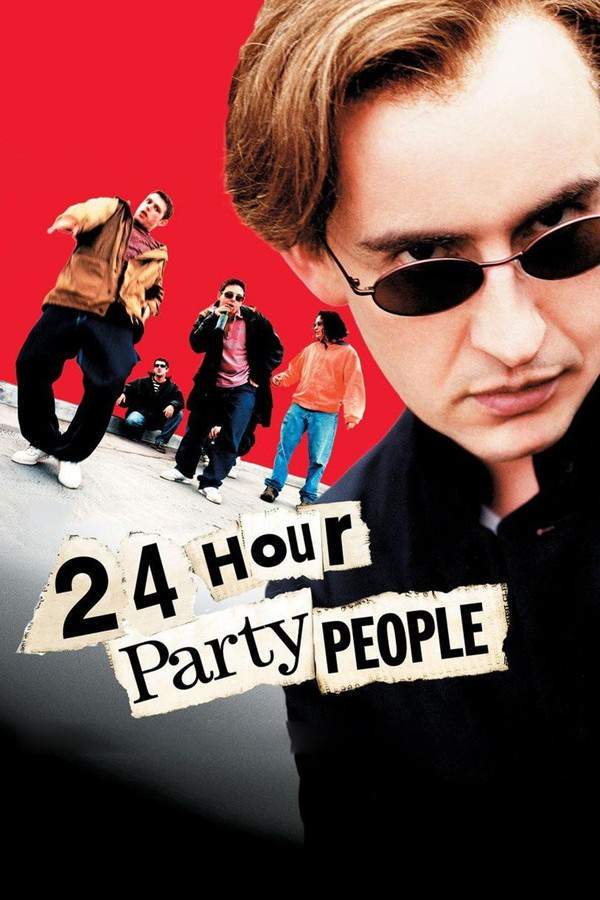
24 Hour Party People (2002) movie poster

Timeline

24 Hour Party People (2002) Timeline Explained – Every Event in Order

Release, runtime and language
2002 · 117 min · English
JustWatch #2,713 28
Directed by
Michael Winterbottom
Starring
Lennie James, Steve Coogan

In 1970s Manchester, an ambitious TV reporter named Tony Wilson unexpectedly encounters the Sex Pistols, which inspires him to pursue musical innovation. He becomes a key figure in the rise of Factory Records and The Hacienda, a nightclub that becomes central to the burgeoning alternative music scene. Wilson champions punk’s rebellious energy, inadvertently shaping Manchester’s vibrant cultural and musical identity and creating a lasting impact on the city’s landscape.

On this page (6)
  1. 1 Where to watch
  2. 2 Events in order (14)
  3. 3 Timeline questions answered
  4. 4 Movie threads
  5. 5 Movies like 24 Hour Party People
  6. 6 Every angle

Where to watch

Where to Watch 24 Hour Party People (2002)

Where can you watch 24 Hour Party People? Stream, rent or buy it in the US, including on Amazon Prime Video, fuboTV and MGM Plus: current JustWatch availability with up-to-date prices.

Streaming availability powered by JustWatch

14 events in order · contains spoilers

24 Hour Party People Timeline: Events in Chronological Order

Every key event of 24 Hour Party People (2002) in order, scene by scene, with when and where it takes place. Use it to untangle flashbacks, time jumps and parallel storylines, to refresh your memory before the sequel or to find the exact scene you are thinking of.

  1. Introduction of Tony Wilson

    The film opens with Tony Wilson as the central figure, portrayed by Steve Coogan. He introduces himself in a unique narrative style, breaking the fourth wall to engage the audience right from the start.

  2. The Vibrant Music Scene of Manchester

    The timeline shifts back to the late 1970s, highlighting the blossoming music scene in Manchester, England. This setting serves as the backdrop for the rise of influential bands that would shape the musical landscape.

  3. Formation of Iconic Bands

    During the early 1980s, bands such as Joy Division and New Order emerge from the vibrant Manchester scene. Their unique sounds and styles begin to attract attention, paving the way for a new wave of music.

  4. The Rise of Factory Records

    Tony Wilson establishes Factory Records, a label that becomes synonymous with the Manchester music scene. This pivotal moment underscores Wilson's role in nurturing talent and fostering a distinctive musical identity.

  5. Joy Division's Success

    Joy Division rises to fame with their innovative sound and poignant lyrics. However, the band's success is intertwined with personal struggles, particularly that of their lead singer, Ian Curtis.

  6. Ian Curtis's Tragic Death

    In 1980, the film recounts the tragic suicide of Ian Curtis, which shocks both the music community and fans worldwide. The event is portrayed with a blend of sadness and humor, emphasizing the absurdity of real-life events.

  7. Birth of New Order

    Following Curtis's death, the remaining members of Joy Division regroup and form New Order. This transition marks a significant evolution in their music, reflecting both personal loss and artistic growth.

  8. Frenetic Party Scenes

    The film showcases numerous vibrant party scenes filled with the energy of sex, drugs, and rock 'n' roll. These moments capture the essence of the time and contribute to the film's comedic tone.

  9. The Happy Mondays Join the Scene

    The Happy Mondays emerge in the late 1980s, adding a new dimension to the Manchester music scene. Their unique style and energetic performances become emblematic of the era's party atmosphere.

  10. Cultural Impact of Manchester Music

    Throughout the 1980s and early 1990s, the music scene in Manchester influences cultures far beyond the city. This impact is highlighted through archival footage and commentary on the significance of the era.

  11. The Legacy of Factory Records

    The story reflects on the eventual decline of Factory Records. Despite its challenges, the label's legacy endures, representing a crucial chapter in music history.

  12. Celebration of Absurdities

    The film celebrates the absurdities of the music scene with a tongue-in-cheek approach. It refrains from moralizing, instead focusing on the quirky, often chaotic nature of the events.

  13. A Fast-Paced Conclusion

    As the film nears its end, Wilson maintains the energetic storytelling style. The narrative wraps up by revisiting the key themes of sex, drugs, and the exhilarating world of rock 'n' roll.

  14. Final Thoughts on the Era

    In the closing scenes, Wilson reflects on the lasting impact of the Manchester music scene from 1979 to 1992. The film leaves viewers with an appreciation for this vibrant cultural period.

Last updated: November 16, 2024 at 11:58

Was this helpful?

Timeline questions answered

24 Hour Party People Timeline Explained: Your Questions Answered

When does it happen, and why in that order? The questions people ask about the chronology of 24 Hour Party People (2002): time jumps, flashbacks, cause and effect between scenes and the correct order of events, each answered with spoilers.

Q1

Why did Tony Wilson start Factory Records after encountering the Sex Pistols?

After witnessing the Sex Pistols perform in 1976, Tony Wilson was inspired to bring the same rebellious punk energy to Manchester. He co-founded Factory Records as a way to document and promote the emerging local music talent, wanting to capture the chaotic innovation he saw in the punk movement. Wilson believed Manchester needed its own voice in the music world, and creating a label was the most direct way to achieve that.

  • factory records
  • tony wilson
  • sex pistols
  • manchester music
  • punk rock
Q2

How did Joy Division become New Order after Ian Curtis's death?

Following Ian Curtis's suicide in May 1980, the remaining three members, Bernard Sumner, Peter Hook, and Stephen Morris, decided to continue making music together. They reformed as New Order, shifting from Joy Division's dark post-punk sound to a more electronic, dance-oriented style. This transformation reflected both their desire to move forward and the changing musical landscape of Manchester.

Foreshadowing: Earlier scenes show Joy Division's rising fame and Curtis's increasing personal struggles, setting up the inevitable tragedy.

  • joy division
  • new order
  • ian curtis
  • band formation
  • manchester music
Q3

Why did Factory Records eventually fail despite its initial success?

Factory Records collapsed primarily due to financial mismanagement and the high costs of running The Hacienda nightclub. Wilson's insistence on keeping the label independent and his generous contracts with artists meant profits were thin. When The Hacienda became a money pit and key acts left, the label couldn't sustain itself, eventually declaring bankruptcy in 1997.

  • factory records
  • hacienda
  • bankruptcy
  • financial failure
  • manchester music scene
Q4

What role did The Hacienda play in Manchester's music scene?

The Hacienda was a nightclub opened by Factory Records in 1982 that became the epicenter of Manchester's alternative music scene. It provided a venue for emerging bands to perform and helped catalyze the connection between Manchester's musical and cultural movements. The club became synonymous with the acid house and rave culture of the late 1980s, though its success contributed to Factory Records' financial troubles.

  • the hacienda
  • nightclub
  • manchester
  • acid house
  • factory records
Q5

Why does Ian Curtis choose to end his life in the film?

The film depicts Ian Curtis struggling with severe depression, a troubled marriage, and the pressures of fame. His lyrics had always explored dark themes of death and isolation, and his personal life was in turmoil. On May 18, 1980, he hanged himself in his kitchen, leaving behind his wife Deborah and young daughter. The film treats this moment with a mix of sadness and the absurdist humor that characterizes the entire narrative, avoiding a purely tragic portrayal.

  • ian curtis
  • suicide
  • joy division
  • depression
  • manchester
Q6

Why does Tony Wilson serve as the narrator throughout the film?

Steve Coogan's portrayal of Wilson as the narrator reflects Wilson's actual role as a central figure in Manchester's music history. The fourth-wall breaks are a stylistic choice that mirrors Wilson's own charismatic, attention-seeking personality. This approach also helps clarify the chaotic events of the era while maintaining the film's energetic, unconventional tone. Wilson literally addresses the audience to explain and contextualize the manic events unfolding.

  • tony wilson
  • narrator
  • steve coogan
  • fourth wall
  • manchester music
Q7

Why did major bands eventually leave Factory Records?

Bands like New Order and the Happy Mondays left Factory Records because the label couldn't pay them what they were owed. The Hacienda's mounting debts and Wilson's poor financial management meant artists weren't receiving royalties. New Order eventually signed with larger labels to get paid, while the Happy Mondays disbanded amid internal conflicts and legal disputes with Factory.

  • happy mondays
  • new order
  • record label
  • artist departures
  • factory records
Q8

Why did Tony Wilson become such an important figure in Manchester's music scene?

Tony Wilson became important because he was willing to take risks where others wouldn't. He founded Factory Records to showcase Manchester talent, opened The Hacienda to give bands a venue, and used his television connections to promote the local scene. His uncompromising vision and relentless self-promotion helped put Manchester on the musical map, even when his business decisions ultimately led to failure.

  • tony wilson
  • manchester
  • music scene
  • influence
  • factory records
Q9

How did the Happy Mondays become part of Manchester's music scene?

The Happy Mondays emerged in the late 1980s, representing a shift toward dance-influenced psychedelic rock. Fronted by Shaun Ryder, they blended acid house, funk, and rock, becoming emblematic of the baggy movement. Their success with albums like 'Pills vs. Thrills' made them one of Manchester's biggest acts and helped define the era's party atmosphere.

  • happy mondays
  • shaun ryder
  • baggy
  • manchester
  • acid house
Q10

Why does the film cover both the triumphs and failures of the Manchester music scene?

The film's dual focus on rise and fall reflects the actual arc of Manchester's music revolution. Wilson's story is one of ambition, innovation, and eventual hubris. By covering both the exciting cultural explosion and its costly consequences, the film creates a bittersweet portrait of an era. The comedic tone doesn't erase the failures, it contextualizes them as part of the chaotic, celebratory spirit the film honors.

  • manchester music
  • rise and fall
  • factory records
  • cultural impact
  • 1980s
Q11

Why is the film told in such a fast-paced, chaotic style?

The manic storytelling mirrors the energy of the Manchester music scene itself. The frenetic pace reflects the drugs, parties, and artistic ambition that defined that era. Director Michael Winterbottom wanted viewers to feel the visceral, in-your-face atmosphere of the time, using rapid editing and fourth-wall breaks to replicate the chaotic nature of punk and post-punk culture.

  • film style
  • pacing
  • manchester
  • punk
  • energy
Q12

Why does the film include real archival footage of the bands?

The use of authentic archival footage grounds the fictionalized narrative in reality. It connects the fictional retelling to the actual historical record, allowing viewers to see the real Joy Division, New Order, and the Happy Mondays performing. This technique reinforces that despite the film's comedic, exaggerated approach, these events truly happened and these bands really shaped music history.

  • archival footage
  • joy division
  • new order
  • authentic
  • music history

Movie threads

More Movies Like 24 Hour Party People, by Mood & Story

Curated lists built around what makes 24 Hour Party People tick: the same mood, the same kind of story or the same emotional payoff. Each list explains why these movies belong together.

Movies about cultural revolutions like 24 Hour Party People

High-energy stories that capture the frenzy and impact of a cultural movement. If you enjoyed the frenetic energy of 24 Hour Party People, explore more movies that capture the rise of a cultural scene. These films often focus on music, art, or social movements, blending chaotic energy with a celebratory look at the people who shaped an era.

  • energetic
  • chaotic
  • celebratory
  • irreverent
  • frenetic
  • nostalgic
  • Tone: light, irreverent, celebratory
  • Pacing: fast, frenetic
Why these movies?

The story pattern: The narrative often follows key figures or a collective as they ignite a cultural shift, documenting the exhilarating highs of creation and fame alongside the inevitable messy consequences, financial ruin, or personal costs. The journey is less about individual triumph and more about the seismic wave they create.

Why they belong together: Movies in this thread share a high-energy, almost documentary-like feel for a specific time and place. They are united by a celebratory yet clear-eyed look at counter-culture, a fast-paced narrative style that mirrors the frenzy of the movement, and a focus on the messy, human side of creating a legacy.

Bittersweet rise and fall stories like 24 Hour Party People

Stories of ambitious dreams that soar high and crash hard, told with a knowing smile. For viewers who liked the bittersweet ending of 24 Hour Party People, this section features movies about ambitious projects and their inevitable collapse. These similar stories balance the excitement of building something with the humor and sadness of watching it crumble.

  • bittersweet
  • satirical
  • ambitious
  • nostalgic
  • celebratory
  • frenetic
  • Tone: bittersweet, satirical, light
  • Pacing: fast, energetic
Why these movies?

The story pattern: The plot follows a passionate, often flawed visionary as they build an empire—be it a record label, a business, or a personal dream. The story revels in the creative chaos of the rise but doesn't shy away from the financial, personal, or societal costs, culminating in an ending that is both a tribute and a eulogy.

Why they belong together: These films are linked by their specific emotional blend: the bittersweet feeling of celebrating a glorious failure. They share a moderate emotional weight, using humor and a detached, sometimes satirical perspective to explore ambition and hubris without becoming overwhelmingly heavy or moralizing.

If you liked this

Movies Like 24 Hour Party People

Similar movies to 24 Hour Party People: the same genre, themes or kind of story. Each one comes with its own plot summary, timeline and ending explained.

Browse all movie summaries

Every angle

24 Hour Party People (2002) Explained: Plot, Timeline & Characters

Everything about 24 Hour Party People in one place: what happens in the plot summary, the timeline in chronological order, the characters and meaning and a spoiler-free summary. What's After the Movie adds the cast, box office and post-credit scenes.

Coming soon on iOS and Android

The Plot Explained Movie Summary App

Plot summaries, endings explained and timelines on your phone. Catch up on any movie in minutes, save your favorites and never miss a twist again.

Be the first to know when we launch. Your email stays private, always.

Learn more about the app